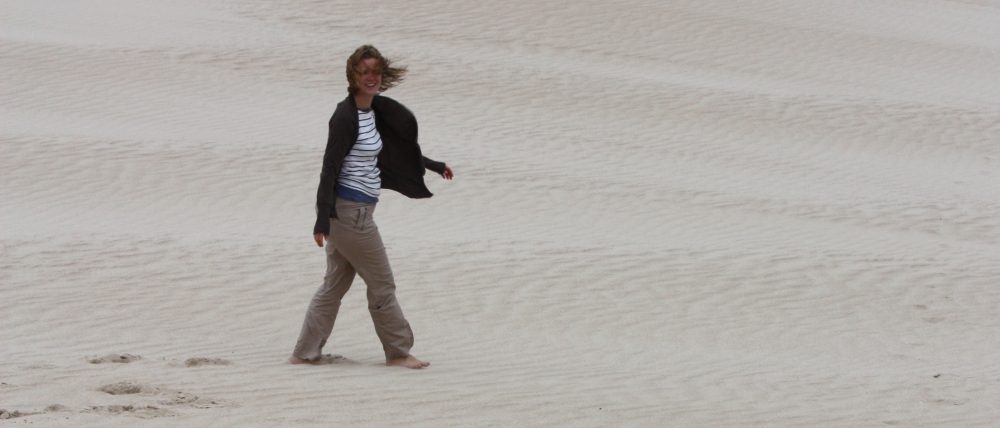
I’m back!

I’m back from my summer vacation and I have a confession to make. I worked during my time off. Why do I feel that this is something I have to confess to? I’m not exactly sure, but I have the feeling that this is generally frowned upon.

The thing is, and now I have another confession to make, I was feeling kind of stuck before I went on vacation. I didn’t get nearly as much writing done during the spring as I had planned, and I was feeling pretty lousy about that. It was a vicious circle; feeling bad about not getting writing done was making it even harder to write. And I have to admit (this is going to be my last confession, I promise), I was also feeling quite frustrated about many aspects of the academic world, so I spent a lot of time thinking about what I really wanted to do with my life. You may think this is ironic for someone who has recently opted out and in, but I beg to differ. Opting out and in is not forever. Nothing ever is.

Well, so I went on vacation feeling less than satisfied over what I had gotten done during the past couple of months, and I brought my laptop with me to the beautiful island where we spend our summers, hoping to maybe remedy that. I had mixed feelings about this but decided to set aside some time for work anyway in order to not feel completely stressed out over everything that hadn’t gotten done.

And boy, am I happy I did. I obviously didn’t do full days, but I did on occasion lock myself in a very peaceful room with a desk and a view to work on a paper that had lately become larger than life. And get this: it was great. It was relaxing. Yes, it was relaxing to work!

I decided to work no more than one hour or so at a time. This was, after all, my summer vacation, and to be honest I can’t really produce coherent academic text for more than that in one go. There were no distractions (i.e. no internet connection) and it was amazing how productive I was in that time slot. And not only that, writing felt fun again after having felt like a chore for the past couple of months. I had almost been worried that I was just going to be a one hit wonder; that I wasn’t ever going to be able to produce anything good anymore.

But now the vicious circle is broken, amazing what a change of scenery can do. After spending an hour or so writing, I felt happy and energized for the rest of the day. I was back and it felt great. So this got me thinking: this is actually exactly how I want to work. I don’t want to have to worry about sitting a full day at my desk in my office. If I’m stuck or if I need to focus my attention on something else, I want to be able to do that without feeling like I’m playing hooky. Instead I’ll happily work when I’m not expected to but when it suits me better. Having said that, I do realize that, being a researcher, I enjoy more flexibility than most. Still, I think I’m on to something. This should not be impossible or unheard of. After all, we have the technology; it’s just the mindset we’re still missing.

What I found personally was that the sense of accomplishment I got from working the way I did this summer really made me feel good about myself. And, interestingly, as I was going over the material for a course on organizational behavior that I’ll be teaching this coming semester, I stumbled across a study that shows that happiness does not lead to productivity, contrary to popular belief. Rather, productivity leads to happiness. Well, isn’t that great; this is what I’ve been saying all along! I’ve quoted her before (see A meaningful existence) and I’ll do it again: as Catherine Sanderson says, if you want to be happy, figure out what you’re good at and find more ways to do it.

A meaningful existence

(My most viewed post since I started The Opting Out Blog. Reposted from March 6, 2015)

A friend of mine once asked me if I don’t get tired of people always coming up to me at parties to tell me their opting out story. And the honest truth is no, I never get tired of it. I wish more people would tell me their stories.

It’s true; people often come up to me to talk about opting out. The other day, a woman in my kids’ school asked me if I was the one with the thesis (I had recently been interviewed for our local newspaper), and told me that she is also one of those women. This happens to me quite a lot.

I think it’s wonderful that people recognize themselves in my research, and that it touches them somehow. I feel honored that many want to share their experiences with me. I often hear that I have put words on feelings they haven’t been able to verbalize or analyze themselves. I take this as a great compliment and a sign that my research is close to reality and has managed to capture shared experiences. Because that is what they are, shared experiences. We experience similar struggles in our lives when, for example, trying to combine work with family, or simply trying to manage in an ever more hectic working environment, even though we seldom talk about it. Unfortunately it has been a bit of a taboo to admit that maybe we aren’t doing great when we’re trying to have it all. Many people seem almost surprised that others seem to feel the same way, that they aren’t unique in their frustration, their fatigue, and their turmoil.

Another thing people often want to talk about is what these women opted in to after having opted out. Many women I meet dream of opting out, but don’t know how to go about it, nor do they know what they could do instead. And that is the thing, it is hard to imagine anything other than what we know – it is hard to imagine alternative ways of living and working, which is what people who long to opt out are looking for. Their current lifestyle might not feel meaningful, maybe the stress they experience has a negative effect on their wellbeing, or maybe they are just simply overwhelmed. At the same time there is all this hype and advice on how to be happy, so we expect more of life than just struggling to get by. And rightfully so; this is our only life, we might as well make the most of it.

But unfortunately there is no recipe for opting out and in to new meaningful and manageable lifestyles. The women I have talked to opted in to everything from housewife to entrepreneur. Some have taken top positions in organizations – but on different terms – some have gone back to school and then embarked on a new career. Different people obviously want very different things in their lives and some people want to opt in to types of work that others want to opt out of. The bottom line is that people who opt out, are doing so from a certain way of living and working that is expected of them but that just isn’t working for them in order to adopt a way of life that not only works for them, but that allows them to thrive.

We are all susceptible to other’s expectations and to what other people think we want, or should want. We don’t always realize that we may be living other people’s dreams and not our own. People who opt out typically spend a lot of time soul searching before they actually take the step, and when they finally figure out what it is they are going to opt in to instead, they are pretty clear on who they are, what is important, and what they are and aren’t willing to give up.

Unfortunately there is no magic recipe, but I did read something that I think really hit the nail on its head. Among all the advice on how to find happiness circulating on the Internet, I saw one post that really resonated with me. According to Professor Catherine Sanderson one way to be happy is simply to “figure out what you do well and find ways to do it.” When you do something well you generally feel good about what you do, which in turn feels meaningful. And a meaningful existence really helps when dealing with whatever it is life hands you.

It is the courage to continue that counts

The other day I found out that my post-doc research project was rejected by yet another foundation. I sometimes think that we academics must be gluttons for punishment since this is what we choose to put up with again and again. My husband suggested that I frame the letter of rejection (see my previous post Temporary setbacks for more on framing letters of rejection), except there was no letter of rejection to frame. It was one of these foundations that only lets you know if you do get funding. If you don’t, there’s nothing, no letter, and definitely no feedback regarding why you didn’t get the funding, or what you could do to improve your application.

Well, since there was nothing, I decided to hang an empty frame on the wall of my office instead, which I did, and I find it strangely empowering. I have a beautiful, empty, oval frame over my desk and it reminds me that no matter what setbacks I experience, they are just temporary and they don’t define me. They aren’t going to stop me from getting on with my life and doing whatever it is that I want to do.

While I was hanging the frame, I happened upon a post-it note among the papers on my desk, on which I have apparently jotted down the following quote some time ago:

“Success is not final, failure is not fatal, it is the courage to continue that counts.”

– Winston Churchill

How appropriate. I stuck it in the middle of the empty frame.

So I will leave you with these words as I take a break over the next few weeks. I won’t be completely silent though; I’ll be reposting my four most read posts since I started my blog. These posts have by far accumulated the most views, so hopefully you’ll enjoy them! I’ll be back at the beginning of August!

Reflections of a blogger

Today I’m celebrating my 30th blog post. It’s about seven months since I started blogging, and it both feels like yesterday and as if I’ve had this blog forever. One thing is for sure though; I never thought I would ever become a blogger. There is something about being that public, and about being publicly private, that I found both off-putting and scary. You know, while being worried that no one was going to read my blog, I was also pretty worried that someone was actually going to read my blog.

And also, I have to admit that at a certain point so many people seemed to be starting blogs that my automatic – and irrational – reaction was that if everyone else is doing it I certainly don’t want to. It’s kind of like when the movie Titanic first came out. Everyone was watching it and talking about it and gushing over all the Oscars it had gotten and I felt absolutely no urge to see it. It’s silly I know, but what do you do? I did finally see it a couple of years ago in Adelaide when they came out with a 3D version, and I did enjoy it, which I never doubted that I would, but that wasn’t the point was it. Funny this semi-conscious need to be unique, which many argue is the essence of this era of individualization in which we live. Although ironically, perhaps the joke’s on us, because it’s also been argued that individualization is just a trend that we strive towards en masse, while we like to think we’re being different.

But surprisingly, since I was so reluctant, I have really enjoyed being a blogger. Although at the same time, I’m quick to tell people that I’m not a typical blogger, that I mostly see this blog as a weekly column. Although what is a typical blogger really? I guess I need to realize that I am a blogger just like any other blogger.

When I started this blog, I wanted it to be a place where I could to talk about my opting out research and make it more accessible to a wider audience, and I also wanted more control over the publicity my research was getting, i.e. what was being said about my research and when. After receiving my PhD I got quite a bit of media attention, all of which was positive. And although nothing of what was written about my research was wrong – I was allowed to check articles for accuracy before they were published – I still felt that journalists generally seemed to choose a similar perspective of opting out to write about, which wasn’t wrong in any way, but which kind of gave a one-sided version of what opting out and my research is about. The story was mostly about how combining work and family easily becomes too much for women for whatever reason, which in turn compels them to opt out and live on their own terms. And that may be true but there is so much more to opting out than that. So I wanted to use this blog to write about and raise discussions on all the different aspects of opting out.

And then I thought, well even if no one reads my blog, it will also be a way for me to accumulate texts on my research, which I could perhaps one day rework into a book. Because although I already have plans to rework my thesis into an academic book, I’m convinced there is also material in there for a so-called trade book, a less academic book that is. And since writing takes time, I need to think about what I choose to dedicate my time to. My supervisor gave me sound advice when I graduated, saying that even though a trade book is possible, writing one is time away from academic papers or articles, which I need to write if I want an academic career. Now, whether or not I want an academic career on the terms that one is expected to have an academic career is another question, and something that I will save for another blog post, but either way I want to keep my options open, so writing and publishing academic papers is what I’m aiming at. But writing two pages every week for my blog is very doable and doesn’t take a lot of time away from my so-called day job, so this seemed like a good plan. Who cares if anyone reads your blog, right?

Well perhaps, but somewhat unexpectedly, I got readers and followers! And not only that, my readers and followers are from all corners of the globe, which is very exciting. So I guess collecting texts is fine, but it would certainly not feel this fun nor meaningful to produce these texts if it weren’t for all of you!

So my original plan was to post every other week. And being something of a risk-averse control freak, I sat down and made a list of topics I could write about before deciding on whether or not I would try blogging. I came up with about 20 topics, which I thought should keep me going for about a year. And this I was going to do whether or not anyone read my blog.

But blogging turned out to be way too energizing to stick to my original plan. Not only did I realize right after publishing my first post, that waiting two weeks to publish the next one would just be impossible. Right then, two weeks felt like a very long time, and I got so inspired by all the comments I got that my mind was bubbling with ideas for new posts. So I quickly discarded my planned timetable, as well as my list of topics, as they seemed boring compared to the ideas I get from comments and discussions.

I sometimes worry that I’m going to run out of things to say. But as my husband says, if that should ever happen, I just need to read more because reading gives me new perspectives and ideas. And it’s true; you have to read in order to be able to write. Also, if worse comes to worst, I’ll just have to set up more lunch dates with my inspirational friends and colleagues, who always give me a lot to think about.

So thank you for being my readers for these first 30 blog posts! I appreciate every question and comment I get, whether online or in person. This is what makes me want to sit down and write the next post pretty much right after I’ve posted the previous one. I truly look forward to continuing blogging, and to writing the next 30 posts, and more!

Having what it takes

With the risk of turning the entire academic world against me, I’m going to let you in on a secret: to get a PhD, you really don’t have to be a rocket scientist. But you do have to be tenacious and diligent. That means that when working on a PhD, you’re in it for the long haul and you have to have the discipline to keep at it. You can’t give up. Even when you think you are never going to finish, that it will never turn into a thesis, you still don’t give up.

The other thing about working on a PhD is that it is an emotional roller coaster. Especially in an area like the social sciences, where you choose your topic – a topic you’re interested in, or even better, passionate about – you inevitably start to equate yourself with your work. Your thesis becomes a very personal project, and since you’re basically working on your own, your self-esteem fluctuates with your thesis. When work is good you think it’s because you are good, and when work isn’t so good you invariable start feeling that you’re pretty bad yourself. Yes I know, it isn’t true, but that is how it feels.

So it’s years of ups and downs, euphoria and despair – and plain hard work of course – and you stick it through and all of a sudden you’re given the green light to submit your thesis. And then you get on the mini emotional roller coaster of waiting for examiners’ reports, and then you finally get those and you probably have to do some revisions and finally, magically, you finish your thesis and it gets accepted and life is a dream. The happiness I felt when my PhD was accepted is almost hard to describe. It lasted for weeks. A friend of mine said it was like being in love.

And then you realize, that although you made it to the end of your journey, it really wasn’t the end, actually it’s only the beginning. Now you embark on your life as a ‘real’ academic, and to do that you have to publish. That is, you have to write and publish academic papers in order to prove your worth as an academic, and you have to continue doing so again and again to stay in the game.

And that’s where I am right now. Near the beginning of my continued journey, and I’m working on papers. What’s surprising is that writing papers of say 8000 or 15000 words depending on what journal you plan to submit to, is unexpectedly hard. There’s no space to embellish the way I had the luxury of doing in my thesis. And also, after having put my heart and soul into my manuscript, mustering the energy to saying selected bits again but differently feels challenging. Not to mention all the future rejections I’m bracing myself for…

As I reflect over this path I’ve chosen, that certainly doesn’t feel like the easiest path at the moment, I think about tenacity, and realize that this really goes for anything you want to achieve in life. If you want something, you’re just going to have to work hard for it. Most of us are anyway. It reminds me of a TED talk I once saw (here’s another secret, I really like TED talks). I think it was a talk by Brené Brown and she mentioned how although the organizers invite successful people to talk at the TED conferences, the talks are really about failure. Instead of talking about great successes and breakthroughs, the speakers talk the audience through all the failures it took before achieving success. If they had given up the first moment things got tough, they wouldn’t be where they are now, and ironically we wouldn’t have very many success stories to talk about.

So how does this translate to every day life? Well, I’m going to quote my dad whose motto, whether playing a game of chess or navigating professional life, is ‘never give up’.

Temporary setbacks

I once heard of a professor who frames his letters of rejection from academic journals, and hangs them on the wall of his office so that his PhD students and colleagues can see them. And apparently he has lots of them. The reason he does this is that he wants his students to see that although he is a successful and experienced academic, he still gets a lot of letters of rejection, and he doesn’t allow them to deter him from what he wants, and that is to keeping building his career and keep working as an academic.

Last week I received a negative response from a foundation that I had applied for funding from. This was funding I really wanted. It was for three-year postdoctoral research, and I submitted my application in September last year. Yes, it took seven months to find out I didn’t get the funding.

Now, this funding is very prestigious and hard to get, there is only about a 10% chance of getting it, so I knew that the odds were against me. But I still wanted it very much and I’m disappointed of course.

What do you do when things don’t go the way you hoped? That is, other than frame the letter of rejection and hang it on your wall? This was only my first application for this particular project – I still hope to get funding for my post-doc research project elsewhere – but it sort of woke me up to the fact that the next one may also fall through, and the one after that. So I had a mini existential crisis over the weekend, which I spent thinking about whether this way of life that I chose to opt in to, is really any way to live? I mean, no matter how inspirational that professor with his walls covered with letters of rejection is, being an academic and being faced with rejection so often really doesn’t seem like a lot of fun.

However, no matter how hard I think about it, I still can’t think of anything I’d rather be doing than what I’m doing now. Well, for the time being at least, we all know that life changes, and situations, wants, and needs change. But I did realize one thing. I realized how quickly you get sucked in by the rules and structures of whatever world it is in which you live and work, despite being hell-bent on living and working on your own terms, terms that work for you and that reflect what it is that is important to you.

So what you do when hit with rejection and disappointing news is that you pause, think, and then you get up and you get on with your life and carry on with whatever it is you are doing.

I realized that I don’t need to wait around for someone to give me permission to start this post-doc research project. I can start now, small scale, and then expand my research project when I do have funding for it. Ironically, the main criticism I got from this foundation that doesn’t want to fund me, was that since men opting out is virtually a non-explored phenomenon, they aren’t convinced that it really is a phenomenon. In other words, since no one has researched it, they don’t feel convinced that there is anything to research. I obviously wasn’t clear enough in my research proposal, because although men haven’t been a part of the opting out debate, it does not mean that there is not ample research to argue that opting out indeed is a phenomenon that can also encompass men.

So that is what I’m going to do. I’m going to start small scale now, and gather some evidence, which will make future research proposals even stronger. And then I will be able to expand my study once I do have the funding.

So if you are a man who has opted out, or know of a man who has opted out who may be willing to be interviewed, please email me at theoptingoutblog@gmail.com

Remember, I define opting out as leaving mainstream career models and expected ways of working in order to live and/or work on one’s own terms. This can be anything from quitting work altogether to doing the same kind of job but with a different mindset.

Or if you just want to share your opting out story or experiences with me, whether a man or a woman, I would love to hear from you.

All emails are of course confidential and will be treated as such.

So here I go, embarking on the exciting project of studying men and opting out, and exploring how that is similar to or different from women’s experiences. This is something I have been planning to do since I started working on my PhD in 2009, and I simply can’t wait to get started!

Life is messy

I’m working on a paper at the moment, about what a complex phenomenon opting out really is. You’ll often see stories in the media of people who have opted out of their careers to do something completely different: move to the country and raise chickens, sell their house to buy a sailboat and sail the world, open a hotel spa in Thailand, or a café just down the street. These people all seem so happy and it all seems so easy. But opting out is anything but easy.

Those who opt out, generally go through a relatively major crisis that pushes them to take the step. So that which in the colorful pictures of smiling people in magazines looks like an easy, obvious, and sometimes quick decision, really is the result of major feelings of doubt and insecurity, as well as careful deliberation and planning, before daring to take the step and adopt a new lifestyle. And to be completely honest, daring is the wrong word to use here because the people who opt out, rarely feel that they were brave and that they dared to do anything. After having gone through what they did, opting out and in seemed like the only option and was simply something they just had to do.

But even then, even after having taken the step, even though they know that this was what they had to do, they continue to feel uncertain, and they continue to have identity crises as they struggle to come to terms with their new selves and lifestyles. This is because when you have dedicated years to working in a certain way, it becomes such a great part of your identity that leaving often causes an identity crisis.

Now, you may be thinking, she really is painting a painful picture of opting out. But after having finally found and adopted their new lifestyles, the people who opt out and in feel authentic, fulfilled and, yes, happy. Even so, they continue to have moments of doubt, moments when they struggle with their choices.

It is precisely because the opting out phenomenon is so multi-faceted and multi-layered that I never seem to tire of studying it. Opting out is good and it is bad – although mostly good, judging from how the people I’ve interviewed feel about how things turned out. And this complexity reflects life in general. Nothing is all good or all bad. No one is always happy, confident, and successful. No one is supposed to be. That would just be boring.

On bad days – days when I feel like a fraud, thinking any second now people will notice I have no idea what I’m doing – I look at other people; people in the media, for example, who are so successful and seem to have purposefully made it to where they are, knowing exactly what they were doing every step of the way. However, although this may dazzle me for a second, I know that their journeys weren’t any more painless or any less filled with doubt and insecurity that anyone else’s. Experience has taught me that in reality things very seldom go as planned. Unexpected opportunities come up, or plans fall through, making us choose alternative paths, and afterwards we add causality and coherence to our stories, giving meaning to actions, choices, and events in retrospect. Having a coherent life narrative is, after all, important.

But although we try to act otherwise, in reality life is messy. So if you’re worried that you’re the only one who feels lost, or who doesn’t have it all figured out, don’t. No one does. We all just make it up as we go along.

Clarity comes with action

I’ve been a bit under the weather during the past few days, and as a result haven’t really had the energy to see a lot of people nor have I read as much as I usually do; two activities that are my greatest source of inspiration. And since I haven’t had a lot of new impulses, I find that I’m sort of at a loss of what to write about on my blog this week.

While I was working on my thesis, whenever I would feel stuck and just sit there staring at the blank screen, not knowing how to even start, my husband would say, “Read something!” He had noticed a pattern, which I just hadn’t seen. When I read other people’s work I would get ideas and feel inspired, and it would help me get started. So now a days that’s what I do, whenever I find myself stuck, I take a break and read. Sometimes, however, I forget and have to be reminded.

I horseback ride in my free time. Sometimes if I’m doing a particularly difficult exercise with the horse, and if I keep getting it wrong, my instructor will say “If you get it wrong and continue doing the same thing over and over again it’s going to continue going wrong in the same way again and again. Try doing something differently, anything – your posture, the position of your hands, how fast you’re going – anything.” She is right of course and although this is so simple it is sometimes hard to see. And the same goes for life. If you want your life to be different, you’re going to have to do something differently, and if you don’t know what, just start with something, anything. If you continue doing what you have always done, your life will be what it has always been.

I’ve mentioned before how I often get asked for advice on how to opt out, or rather how to find a new lifestyle to opt in to. People want to hear about what other people have done, thinking maybe they will hear a story that they can adopt or duplicate. But it isn’t that simple. Finding what it is that is going to feel meaningful and work in one’s own life is so individual. And there are no short cuts.

But the advice that I sometimes do give when pressed (because although I’m something of an expert on the opting out phenomenon, I’m not an opting out coach or consultant) is that clarity comes with action. And when you’re looking to change your life, there are two things that I think are important.

First, talk to people. Talk to anyone really about your thoughts, your dreams, about what you think you want to do, or just that you want to do something different but you don’t know what. Who knows, someone may have ideas, or even know of opportunities, but also saying things out loud usually helps you see things in a new light and clarify what it is you really want.

And second, try different things. If you don’t do anything differently, if you don’t try anything new, like my riding instructor says, things will continue being the same as they have always been. Again, who knows, one day you might actually try something that you love that turns out to be the thing that you end up opting in to. But if you never try anything new, you will never find anything new.

To be honest, I had no idea how much I was going to love doing research when I opted out and in. I knew I wanted to study more sociology and social psychology, but it wasn’t until I actually started working on my PhD that I realized I wanted to be an academic.

The same can be said about this blog. I was thinking that I should have some sort of platform where I could write and talk about opting out, but honestly I felt reluctant to start blogging. I had never done it before, and although I had been on social media to a certain degree, I really hadn’t been very active. Unexpectedly, this blog has turned out to be a great source of energy for me. I like writing, and as an academic, writing non-academic texts is not only fun, it feels incredibly liberating. Also, the comments I get from my readers here on the blog, on other social media, and in person give me the energy and inspiration to keep writing. It’s exciting to be involved in debates and discussions around the topics that I feel are relevant to this phenomenon that we call opting out, and to how we will organize and reinvent our private and professional lives in the future.

So, now that I’m better, I’m looking forward to inspirational lunches and discussions again. How about it, you know who you are!

The search for happiness

After writing last week’s blog post A meaningful existence, I was inspired to finally read a book that has been sitting on my bookshelf for a few years now: Smile Or Die: How Positive Thinking Fooled America and the World by Barbara Ehrenreich. I bought it because I was interested in the pathological search for happiness and need to think positively in Western society, but there are so many good books to read that I just didn’t get around to it (and to be honest, I didn’t need to read this particular book to finish my thesis). Lately, however, I feel like I am being bombarded with happiness advice on the Internet. I don’t think I’m exaggerating if I say that I see posts, articles, interviews etc. on how to be happy in my Facebook newsfeed several times a week, if not daily.

This bothers me, because this obsession to find happiness is missing the target. Yes, I as much as anyone else want to be happy, who wouldn’t. But happy doesn’t happen on its own. It’s a feeling that is the result of something else. I believe that it is the result of meaning and fulfillment. That is what Professor Catherine Sanderson, who I quoted in last week’s post, was getting at when she says that happiness comes from figuring out what you’re good at and finding ways to do it. That is what Barbara Ehrenreich, who I quoted in my post The irony of work-life balance, meant when she talked about losing oneself in one’s work. Having a meaningful existence is gratifying, doing meaningful work – paid or non-paid – is fulfilling, and when we feel fulfilled, we also feel happy. Suddenly the rest, the things we may think will make us happy, like the perfect body, the latest fashion, the perfect house, or whatever else, doesn’t matter so much anymore. It can be nice to have nice things, I as much as anyone else like nice things, but these things are an extra bonus, and not instrumental in making us happy.

Searching for happiness on its own is like searching for a great sensation, a great taste for example, without realizing that what we really need to look for is the food that provides the great taste.

In Smile Or Die, Ehrenreich takes a critical look at the positive thinking and the search for happiness that has become such a great part of our culture in the past decades. At the end of the 1990’s, the positive psychology movement was instrumental in making happiness and positive thinking a collective obsession. Happiness and optimism were linked to everything from health to career success, and perhaps not surprisingly became a great hit in the media, not to mention among motivational speakers. Happiness became the solution to all mundane problems, and wasn’t particularly difficult to sell, I mean like I said before, who wouldn’t want to be happy.

However, this obsession with positive feelings and happiness can also have a dire effect on our personal development and our relationships with others. For one, it leads to self-absorption. Also, refusing to have anything to do with anyone who doesn’t trigger only good feelings about ourselves, not only cuts us off from reality, it also effectively protects us from any deeper insights into ourselves or our lives. For that we need the whole scale of emotions, both god and bad. Plus, there is of course the risk of ending up very lonely.

Ironically, research has shown, that this obsessive search for happiness hasn’t made people any happier.

Ehrenreich ends her book by dishing out her own happiness advice. And no, she doesn’t succumb to doing what she is criticizing. It is all condensed in one paragraph:

“Happiness is not, of course, guaranteed even to those who are affluent, successful, and well loved. But that happiness is not an inevitable outcome of happy circumstances does not mean we can find it by journeying inward to revise our thoughts and feelings. The threats we face are real and can be vanquished only by shaking off self-absorption and taking action in the world. Build up the levees, get food to the hungry, find the cure, strengthen the “first responders”! We will not succeed at all these things, certainly not all at once, but – if I may end with my own personal secret of happiness – we can have a good time trying.”

And I couldn’t agree more. Let’s not look for happiness. Let’s look for meaning and let’s feel good about what we do. Only then will we be happy.

A meaningful existence

A friend of mine once asked me if I don’t get tired of people always coming up to me at parties to tell me their opting out story. And the honest truth is no, I never get tired of it. I wish more people would tell me their stories.

It’s true; people often come up to me to talk about opting out. The other day, a woman in my kids’ school asked me if I was the one with the thesis (I had recently been interviewed for our local newspaper), and told me that she is also one of those women. This happens to me quite a lot.

I think it’s wonderful that people recognize themselves in my research, and that it touches them somehow. I feel honored that many want to share their experiences with me. I often hear that I have put words on feelings they haven’t been able to verbalize or analyze themselves. I take this as a great compliment and a sign that my research is close to reality and has managed to capture shared experiences. Because that is what they are, shared experiences. We experience similar struggles in our lives when, for example, trying to combine work with family, or simply trying to manage in an ever more hectic working environment, even though we seldom talk about it. Unfortunately it has been a bit of a taboo to admit that maybe we aren’t doing great when we’re trying to have it all. Many people seem almost surprised that others seem to feel the same way, that they aren’t unique in their frustration, their fatigue, and their turmoil.

Another thing people often want to talk about is what these women opted in to after having opted out. Many women I meet dream of opting out, but don’t know how to go about it, nor do they know what they could do instead. And that is the thing, it is hard to imagine anything other than what we know – it is hard to imagine alternative ways of living and working, which is what people who long to opt out are looking for. Their current lifestyle might not feel meaningful, maybe the stress they experience has a negative effect on their wellbeing, or maybe they are just simply overwhelmed. At the same time there is all this hype and advice on how to be happy, so we expect more of life that just struggling to get by. And rightfully so; this is our only life, we might as well make the most of it.

But unfortunately there is no recipe for opting out and in to new meaningful and manageable lifestyles. The women I have talked to opted in to everything from housewife to entrepreneur. Some have taken top positions in organizations – but on different terms – some have gone back to school and then embarked on a new career. Different people obviously want very different things in their lives and some people want to opt in to types of work that others want to opt out of. The bottom line is that people who opt out, are doing so from a certain way of living and working that is expected of them but that just isn’t working for them in order to adopt a way of life that not only works for them, but that allows them to thrive.

We are all susceptible to other’s expectations and to what other people think we want, or should want. We don’t always realize that we may be living other people’s dreams and not our own. People who opt out typically spend a lot of time soul searching before they actually take the step, and when they finally figure out what it is they are going to opt in to instead, they are pretty clear on who they are, what is important, and what they are and aren’t willing to give up.

Unfortunately there is no magic recipe, but I did read something that I think really hit the nail on its head. Among all the advice on how to find happiness circulating on the Internet, I saw one post that really resonated with me. According to Professor Catherine Sanderson one way to be happy is simply to “figure out what you do well and find ways to do it.” When you do something well you generally feel good about what you do, which in turn feels meaningful. And a meaningful existence really helps when dealing with whatever it is life hands you.

(Read more about Professor Sanderson’s thoughts on happiness here.)