In seventh heaven

This is my seventieth blog post. Come November, I will have been a blogger for two years. Had someone told me this two years ago today – about three months before I started blogging – I would never have believed them. That was something other people did. Who knew I had so much to say?

Seven years ago this summer I opted out and in. I opted out of a business career and became a sociologist and academic. Had someone told me that seven years earlier, I would just have laughed dismissively. That was not for me. But then one day I started playing with the idea of going back to university. I knew it would entail some sort of a change since I also knew that having a PhD isn’t always a forte in the business world, where it’s good to be qualified but not overqualified. However, little did I know what a lifestyle change it really would entail. Not so much on the outside, I still look the same and act the same. No, the change is more on the inside. It’s like a whole new world has opened up for me. So what do we learn from this? I guess John Lennon had a point when he said, “Life is what happens when you are busy making other plans.”

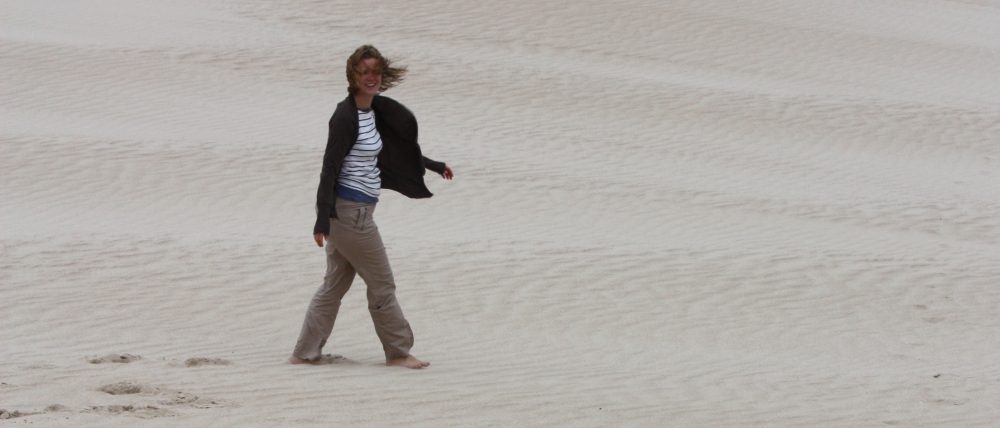
In seven days my summer vacation is up. Anticipating the end of my stay on this paradise island, where I spend much of my time off – where time is unimportant and schedules nonexistent – always makes me a bit blue. Still, I have exciting things to look forward to. In September I will embark on my project, which really is a dream come true. One that I almost gave up on, but then thought, nah, I’ll give it one last shot.

It’s seventeen weeks since my dad passed away. A friend said that although people tell you to get over it you never really do. And it’s true. Although no one has said that to me, the emptiness he left behind is still as big as on the day he died. And that’s exactly the way I want it; I want to feel the emptiness because it keeps him close. As I learn to live with it, it still continues to kind of cast a melancholy tint on things. It’s hard not being able to share exciting news and talk about things the way we used to.

As I sit here, I ponder the bittersweetness and irony of having and not having, wanting and not wanting. But I guess that’s pretty much reflective of life in general. Life is not only sunshine and roses, it’s complicated. But still, I’m very lucky.

The F-word

I got back from the Gender, Work and Organization Conference about a week ago, where I heard a presenter refer to feminism as the F-word. And in all honesty, even though this is the 21st century, that is probably what a lot of people still think of it as – a bad word. Still, feminism has enjoyed something of a revival lately thanks to people like Caitlin Moran and Sheryl Sandberg, who have made it sort of cool to be a feminist. This is, according to another speaker at the conference, apparently especially true among male politicians, although it ironically turns out that claiming to be a feminist tends to work against you if you are a female politician.

So we can safely say that feminism continues to be very controversial, even though the form of feminism that has been gaining popularity today really is quite moderate. The feminism we see today is a far cry from the radical feminism of the 60’s and 70’s. Radical feminists may have rubbed a lot of people the wrong way, but let’s also acknowledge what they and their contemporaries have done for equality. Without them, women today just wouldn’t have much of the opportunities they have.

But because it is so moderate, contemporary feminism worries many of the so-called old school feminists. This became clear during the conference and I have to say I do understand them. The thing is, we have something today that Linda Hirshman in her article ‘Homeward Bound’ has termed choice feminism. The rhetoric of choice is strong in contemporary society and choice feminism resonates well with that. It represents the belief that women can choose how they want to live their lives and whether or not they want to take advantage of their hard-earned rights to work and participate in the public sphere on equal terms as men. Since the assumption is that gender equality already has pretty much been achieved (which it hasn’t, trust me on this) women can choose to embrace traditionalist gender roles and still be considered feminists because they choose to do so. However choice is complicated. What we may think as free choice can actually be a lot of things. For example, generations of cultural conditioning regarding what is considered admirable and desirable for men and women, which informs our decisions without us even being aware of it.

So the reason older generations of feminists are worried, is that choices like this risk undoing much of the gender equality that we have fought so hard to achieve. In other words, many believe that the feminism of today is doing more harm than good in the name of free choice. While it may help the individual woman in her struggle to maintain coherence in her life and combine all the different parts that are important to her, it doesn’t do much for womankind as a whole, which is exactly what the gender equality warriors of the 60’s and 70’s were concerned with.

As Maria Laurino, author of Old World Daughter, New World Mother: An Education in Love and Freedom, writes, “Early feminist leaders were firebrands and iconoclasts who paved the road for changes that benefited the lives of women with more moderate views and temperaments. And today […] feminism – we hear time and time again – is about giving women choices. But outside the fight to protect a woman’s right to terminate a pregnancy, that definition renders feminism virtually meaningless and politically toothless.”

I think that sums it up pretty well.

Well, I came back from the conference thinking about this, and when I came through the door, my daughter greeted me with a book* in her hand. She had just finished reading it and she seemed excited. She told me I have to read it; it was a book written for teens on questions of gender and power. And my thoughts went back to the women at the conference who are worried about the generation of moderate feminists who risk taking a step backward. Maybe, just maybe, they don’t need to worry so much. After all, there is a new generation of people – girls and boys – who seem to be both self-aware and very well-informed regarding everything from gender equality to environmental issues and animal rights. I’m very intrigued by this new generation and I can’t wait to see how things will evolve as they grow into their roles as the future leaders of the world. And yes, I’m definitely going to read that book.


*) A Swedish book: Tänk (tvärt) om! : tjejer, killar och makt by Anna Norlin

It’s not always about kids

I was interviewed for the radio a couple of days ago. It was a program about combining work with children, and I was contacted as an expert on the topic. It was a good interview; I got to say what I thought was important. However, I was a bit disappointed because it turned out they cut the most interesting part. Towards the end of the interview I was asked whether or not I think it’s fair that people who are single or don’t have kids have to pick up the slack when people with kids need to go home (after a full day’s work). Finally it was getting intriguing but for some reason they didn’t find it relevant or that it added value.

People without children are often expected to put in hours that people with children aren’t simply because anything other than children doesn’t seem to be a viable reason to go home when there is work to be done. Although let’s face it, there is always work to be done, it really never ends. Well, I guess we should be grateful that employers realize that kids do need taking care of and that in this day an age it´s generally frowned upon to keep parents from doing so. However, every once in a while I hear a childless person who has had to put in the extra hours complain that it is unfair, and rightfully so. It is unfair.

The thing is it isn’t only married people with children who have families. Most people have families, even people who are single. The so-called nuclear family is not the only type of family you can have. For some reason we assume that kids are the only ones in society who need care. However, other people may need care too, like ageing parents or ailing siblings and friends, and although this may come as a shock to some, childless people may also have care responsibilities.

But it isn’t only care responsibilities that should factor in when deciding whether or not a person should be asked to work long hours. Let’s not forget that there is more to a balanced life than work. And yes, people who are single also want and need balance in their lives.

When I was working on my PhD, I started interviewing women both with and without children, because I was convinced that children are not the main reason people opt out. Well, I soon realized that I needed to focus on women with children simply in order to add to that debate, but get this: the women with and without children all basically talked about the same thing. They had the same reasons for leaving and wanted the same types of things for the future. Although some of them didn’t have to juggle a career with children, their narratives were still strikingly similar.

Care responsibilities really shouldn’t be seen as a problem. And although those who have to pick up the slack tend to feel irritated and fed up, the issue really isn’t that people with children can’t work hard enough. The issue is that many employers don’t recognize that it is neither sustainable nor okay to monopolize someone’s life. Maybe we shouldn’t be asking anyone to work around the clock, whether or not they have care responsibilities.


My kids are ok

Mothers sure don’t have it easy. They tend to be the most scrutinized people in society, and although mothers and fathers together create and raise children, we have incredibly high expectations. Good enough mothering, although a good and healthy concept, has been overshadowed by what researchers call the intensive or scientific mothering ideology – what I like to call ‘project motherhood’. Good enough mothering is definitely not good enough; we expect mothers to be childcare and child development experts, not to mention everything else they need to be – everything from child psychologists to nutritionists. Mothers are also considered mainly responsible for what kinds of adults their children grow up to become: if they become successful, the mother is considered to have done her job well; but if they for some reason don’t, mothers are looked to for blame.

No wonder women often feel insecure in their mothering roles. And the way this plays out is that it is mothers who are generally the most critical of other mothers instead of giving each other much-needed support. It’s understandable, although also very unfortunate. With all the pressure to be the perfect mother (and please note: there is no one perfect way to be a mother. Every mother, child, situation and family is unique and all we can and should do is the best we can. Yes, good enough should really be good enough.); with all the pressure it is natural to feel insecure and mothers look to each other to check that they themselves are ok.

I’ve been there. I have two kids and I have tried to be the perfect mother like everyone else. At times I have also been critical of other mothers to confirm that I was doing ok. This is not commendable and I don’t think I was even aware of it at the time. I wasn’t openly critical though, I have been taught well by my parents: if you can’t be kind and supportive, maybe it’s best to just not say anything at all.

But still I’ve been there, although it was many years ago. Now that I have a tween and a teen, the pressures of being a perfect mother don’t really get to me so much anymore. However a while back I found myself speaking to a person who is on maternity leave and probably agonizing about when the right time is to put her child in daycare and go back to work. We were talking and over ten years after the fact, my choices of how long I stayed at home with my kids were questioned. I’m from Finland and both my maternity leaves have been average for Finnish standards and quite long out of an international perspective. I was on leave slightly longer with my first child and slightly less with my second, as my family was dependent on my income at the time. Both my children have developed to become happy, well-balanced, delightful human beings, so I tend to not worry anymore about what I did or didn’t do when they were infants. Still, it felt like this person was judging me and questioning my choices after all these years when she sounded surprised that I didn’t keep my children at home longer.

It was a weird sensation. I hadn’t thought about it for years because it just feels completely irrelevant to my current situation even though it is obviously top of mind for her. As a mother, admittedly, I may still be a little sensitive when it comes to criticism, but still. We all have to make our own choices based on who we are, what our children need, and what our situation is. We shouldn’t be so quick to judge, none of us really have any idea where anyone else is coming from. We just do the best we can. And besides, why question my choices after all this time? My kids obviously turned out ok.

The ideal worker – a remnant of the past (or at least it should be)

As you may recall, I signed a contract with a publisher a few months ago to write a book on opting out. Well, the deadline to submit my manuscript is approaching and you will be pleased to know that I am currently working on my final chapter, the epilogue! In other words my manuscript is almost finished and ready to go!

Although I love writing (most of the time) and the thought of working on a book still feels like a dream, I will be so relieved when I have finally sent it all off to my editor. I’ve felt like this book project has been hanging over me, because I haven’t been able to work on the book as much as I would have liked to since I signed. The main reason being I was pretty bogged down with teaching during the winter without much headspace for anything else. But my employer has been gracious enough to allow me to concentrate almost solely on the book since the end of April, and all I can say is hooray for understanding employers!

One observation I have made about myself during this process is especially interesting. The thing is, writing is quite different from many other forms of work. I cannot put in a full eight hours, or however long your workday is, writing and producing new text. If I get up in the morning, go to my office, and just sit down at my computer with the intention of putting words down on paper – or rather in a Word document – it would never work. I wouldn’t know what to write, no ideas would come to me, and there would be no book. In order to have something to say, I need to think about what I have read, I need to think about my research, I need to think about what my take on things is… In short, I need time to reflect. And that is not something I can do at my computer. I cannot get up in the morning, go to the office, sit down at my desk and reflect in order to then write down my reflections and turn them into a book. That’s not how it happens.

I need unstructured time where I let my mind wander, where I allow myself space for unstructured and unplanned thinking. It may be in the shower, it may be when I’m jogging, or it may be when I’m vacuuming (Okay no. That never happens, I just don’t vacuum, my husband does. It was just an example). This unstructured time creates space for creativity and if I allow myself this time, ideas come to me and then I can sit down at my computer and just write it all down. And presto, in short creative burst like this a book is born.

However that was not the interesting or surprising observation I was referring to earlier. What has me completely confounded is that although I know this, and although giving myself time and space to reflect is really the most effective and efficient way for me to write a book, my work ethic and my sort of warped idea of what efficient work looks like, makes me feel kind of guilty about not working all the time. Let me run this by you again: I have been taught that the ideal worker goes to the office and works for whatever amount of hours is specified in the contract plus a few more in order to be considered a good and committed worker, regardless of the nature of the work the person is doing. So I of all people, who research working cultures, cultural conditioning, and new meanings of work; who has all these thoughts on how we need to change work in order to bring working culture into the 21st century; and who knows just how important this is for so many reasons not least of which is our wellbeing; I of all people have trouble with alternative forms of work because also I have been conditioned to believe that there is only one right way of working.

So if it is difficult for me, how difficult isn’t it going to be for people who haven’t been researching this for the past seven or so years?

That is a scary thought. But at least I guess I know what I’m up against. And now more than ever I clearly see just how much we need to redefine work as we know it. Times are a changing and our employers need to keep up!

My definition of success

Have you noticed how when you meet new people, the first thing they tend to ask is “What do you do?” I remember a woman I interviewed once who was very frustrated by this. She had opted out but not yet figured out what she was going to do next, and in the meantime she was temporarily at home with her kids. This question frustrated her so much because she couldn’t identify with being a stay-at-home mom, she felt an acute loss of identity and extremely self-conscious about not living up to expectations. ‘Just’ being a stay-at-home mom didn’t feel important enough.

Well, the fact that we don’t really value nonpaid care work is very problematic. I mean, anyone who has been at home with children knows that being a stay-at-home mom is definitely not doing nothing, even though those posing the question aren’t just wondering what you do, but what you get paid to do outside the home. But that aside, I have to say that in a way I really get why there’s an interest in what it is you spend most of your time doing, because aren’t we sort what we do? And now I don’t mean professionally, I mean in general. Without activities and actions, what would our lives really consist of?

Inspired by last week’s post, I’ve been thinking about what exactly it is that makes my life successful. First I thought about my work. I’ve managed to negotiate a pretty good deal for myself at work and in a way I guess that should make me feel successful. But to tell you the truth when I really think about it, having a deal that reflects my worth is actually more of a hygiene factor than anything else. If you come from the business world, you’ve probably heard of Herzberg’s two-factor theory of motivation. There are hygiene factors like working conditions, a salary, and job security, and then there are motivators, which include recognition, a sense of achievement, and personal growth. You feel dissatisfied if your hygiene factors aren’t fulfilled, and if they are fulfilled you just feel neutral – neither satisfied nor dissatisfied. It is only if your motivators are fulfilled that you actually feel satisfaction.

And although I should feel pretty satisfied about getting a good deal, especially considering that women are generally underpaid and as research has shown not as good at negotiating or knowing their worth as men, getting what I deserve is really just a hygiene factor. Anything less would simply be unsatisfactory. What motivates me and makes my life and work a success is something completely different.

As clichéd as it sounds, I came to the conclusion that it is all the things I do and the people I have in my life that bring me joy that make my life feel meaningful and successful. I love that I can make a living reading and writing about things that interest me and that I feel are important. I have so many wonderful meaningful relationships with people close to me and I love that I have the time and flexibility to nurture these relationships, not to mention all the laughter and good conversation! I have produced two of the most delightful human beings I know and watching them grow is definitely one of my favorite things. Also, having a good relationship with them feels like a huge success. I love that I have the peace of mind to slow down enough every now and then to see all the fantastic beauty around me – that is just good for the soul. And I am able to have the most satisfying hobby that challenges me while also allowing me to cuddle with half a ton worth of furry creature (horse-back riding).

Notice how all of these things are activities? It is the things I do and the people I’m actively with which make my life meaningful, and yes also successful. None of the things I’ve listed are about money or prestige. Don’t get me wrong, money is important, we need money to live and to eat, and it is important to get that raise when you deserve it. But for me at least, these are just hygiene factors. It is rather the things that bring me joy that make my life successful.

What is success anyway?

I’m reading Anne-Marie Slaughter’s book Unfinished Business at the moment. You might remember Anne-Marie Slaughter; she was the one who wrote that famous article in The Atlantic titled ‘Why Women Still Can’t Have It All’. The title of her book refers to the feminist revolution, which she argues isn’t finished yet. And I do agree, there is still work to do. Despite so much progress having been made for women, gender equality still hasn’t been achieved. I mean I come from Finland and Finland is considered to be one of the most gender equal nations in the EU (and in the world for that matter) although it is also one of the most gender segregated. However, although Finland is one of the most gender equal countries, there are about 25% women in top management positions and about 27% on corporate boards. The question is, is that gender equality?

I’m actually working on a paper at the moment with a set of interviews of gender equality workers in Finnish organizations. These workers have lead projects in their organizations to make them more gender equal. What I’m finding is that there is a lot of gender fatigue in Finnish organizations today. People don’t really want to talk about gender equality anymore; they think it’s a non-issue. The result is complete disinterest in whatever it is these gender equality workers have to say. No outright resistance; they’re not rude and people generally know what’s politically correct. No, it’s just total indifference, which is worse in a way. I mean if resistance comes in the form of indifference, it’s really hard to fight. You don’t really know what you’re up against. And not only that; it kind of makes the gender equality workers and what they do invisible and that’s just awful.

One of the reasons behind the gender fatigue we see in Finland is that people think that since things are so much better for women in Finland than in many other countries in the world, we need to just give it up and be happy for what we have. Well, I find it hard to argue with people who say that, it’s hard to make them see. But the fact of the matter is that if we say we shouldn’t keep striving for gender equality because we have it so much better compared to others, it’s like saying that we shouldn’t bother about high quality education in schools because in our country children at least get to go to school. Ok, so I’m not sure that was a very good comparison, but you catch my drift.

But back to Unfinished Business. One of Slaughter’s main arguments in her book is that we will never achieve complete gender equality until we start valuing care work. It is women who continue to do the brunt of care work in society – both in countries like Finland and elsewhere. And as long as women continue to be the main carers in society, this will come in the way of having a career on the same terms as men who don’t have as difficult a time juggling work with having a family. As long as this is the case, women will just not be able to have it all.

But if we start to value care work, Slaughter argues, if we start to value also other things than paid work and objective and traditional definitions of success, only then will men also take on other responsibilities and roles in greater numbers. This, in turn, will make it possible for all – both men and women – to care for a family (which is important!) and to have a career without feeling like they’re on the brink of a nervous breakdown.

When Slaughter had her crisis and quit her high status, sought-after, dream job in foreign policy to go back to her university position, she says “I was forced to confront what was important to me, rather than what I was conditioned to want, or perhaps what I had conditioned myself to want.” And that’s the thing. That’s what women who opt out do. They start questioning the objective definitions of success, and they create their own subjective definitions instead. They realize that maybe the high status, high salary, corner office and company car really aren’t what will make them happy. Like one woman in Lisa Belkin’s column ‘The Opt-Out Revolution’ said, the raises and promotions may have meant a successful career, but they didn’t necessarily mean a successful life.

So maybe that’s what we should all do. Maybe we need to think about what success is for us. I mean what it really is, not what we think it should be or what others say it is. What exactly is it that makes your life successful?

Exciting news!

I received exciting news last week. I’ve been applying for funding for my research on men opting out and on the new meanings of work, and finally funding has been granted! Not only that, I got the mother of all funding: three years full-time funding from the Academy of Finland, which in Finland is a really big deal. In fact, it’s only just starting to sink in.

To be able to focus full-time on research is a dream for any academic, and for me it’s especially amazing since this is what I’ve been planning ever since I started working on my PhD several years ago. I want to research opting out as a societal phenomenon, not just a women’s phenomenon, I want to be the first (as far as I know) to include men in the discussion on opting out, and I want to be involved in uncovering and creating new definitions and solutions for work. This is the future and it’s happening now!

I think one of the things that worked in my favor in this round of applications was that I have already started this research. I was frustrated last year when I couldn’t seem to convince funders of the importance of this topic, so I decided to start interviewing men on their opting out experiences anyway without funding because I knew this is what I wanted to do. As a result I’ve already conducted about 10 pilot interviews and could share preliminary impressions and results in my application.

So if there is one learning to take away from this, it is that if there is something you really want to do, don’t wait for permission, just do it!

I’m going to miss teaching though, I was just getting into it and I really liked it. But you win some and you lose some, and in this case the win is pretty amazing. Post-doc research project, here I come!

Oh right, and I also need more men to interview. So if you are a man who has opted out to adopt a new lifestyle or way of working, or if you know of someone who is and who would be willing to be interviewed, please contact me: theoptingoutblog@gmail.com

All emails are confidential and will be treated as such.

Don’t sweat the small stuff

My father passed away a few weeks ago. We were close and I miss him terribly. This is the first time I’ve lost someone this close to me and although I’ve lost beloved grandparents and other people from my extended family, it’s just different when it’s your parent. The grief is acute and physical and it just feels hard to comprehend.

But it really puts things into perspective.

I think about all the people I’ve met during my journey from the business world to academia. The people I’ve talked to about opting out, whether casual discussions at parties or conferences or interviews I’ve conducted for my research. A common denominator for all opting out stories is that something has happened in these people’s lives – a crisis of some sort – that has helped or pushed them to take the step and make a real change instead of just talking or dreaming about it.

And it’s true, a crisis or traumatic event may propel a person to make a change as well as trigger some serious soul searching. If everything goes well (and this is important because let’s not romanticize crisis here; we have to remember that a crisis is no walk in the park and some people don’t recover) it may trigger personal growth and create a feeling of authenticity. As a woman I’ve interviewed said, “ You just don’t waste time on anything that doesn’t matter anymore.”

I’m finding that I can really relate to that right now. I just can’t be bothered sweating the small stuff. Intrigue at work? Not interested. Disagreements and misunderstandings? Can’t be bothered. Students who complain? I refuse to let it get to me. Really though, I’m dealing with more important stuff in my life right now.

And although I’m sad, I’m also finding that I quite like not getting fazed by what’s not important. I feel like I see things more clearly. I just hope it lasts and that I continue being able to put things into perspective. Although I suspect as time passes I will gradually slip back into getting stressed over work and deadlines like I usually do. Because that’s life, nothing is constant and opting out isn’t forever, it’s cyclical.

I wish I could put perspective in a jar and then in the future, when I need to, breathe some in and not sweat the small stuff again.

Sleep your way to the top

Now this week’s title must have made you a least a little curious. I have to admit, thinking up catchy titles for my posts – titles that will actually make people curious enough to click through to my blog – isn’t always my strong suit. So I’m especially pleased with this one. Although before you get too excited I have to confess that this blog post is not about sex. It’s about sleep, among other things.

I saw a video clip of Sheryl Sandberg’s Lean In interview with Arianna Huffington the other day, and ‘sleep your way to the top’ are Huffington’s words. According to Huffington we all sleep too little due to the constant pressure and need to be efficient. However, and the experts all agree on this, a lack sleep does not lead to efficiency. Sacrificing sleep in the name of productivity actually makes us less productive. So if you really want to succeed – if you want to make it to the top – you really need to get enough sleep.

Another thing Huffington brings up is that organizational culture is designed by men and fueled by burnout. Well, I’m very familiar with the concept of masculinist career models and working cultures. It’s true, prevalent career models have been designed by men for men. Whether they represent how all men want to work is a different question, but this is fact. However the idea that it is fueled by burnout was a new thought for me, and a very disturbing one at that. I know working culture can be extreme, and I know that in this day and age the ever more hectic pace and financial uncertainty take their toll. In fact according to the Kelly Global Workforce Index about half (!) of the world’s workforce is reportedly unhappy, mainly due to downsizing and uncertainty, and according to the Harvard Business Review middle managers are among the most unhappy. So I guess it should come as no surprise that also burnout is a real problem.

Huffington goes on to explain that because of this, sleep is a feminist issue and that it is women who need to lean in and reach top positions in greater numbers so that they can change working culture from the inside. So instead of opting out, according to Huffington at least, women need to stick around, gather in greater numbers, and change the environment.

That’s good, I do agree. Corporate life needs to change and we need to change it. I’m unsure of whether women alone can change it however. Women so quickly get assimilated by the culture and need to adopt masculinist norms and ideals in order to make it to the top, and because of this women aren’t necessarily good role models for other women. And the reason women don’t help each other enough as much as you’d hope may also be related to this. In part it’s due to a fear of being stigmatized in an environment where women constantly need to prove themselves worthy.

But either way, I don’t think this is only a women’s issue. I think both women and men need to and will change corporate culture together. Masculinist work cultures don’t suit all men either and like many including me argue again and again, they just haven’t kept up with the times. So yes, it’s a feminist issue, it’s a women’s issue, and it’s also a men’s issue. It’s a question of wellbeing.

But just the thought of whole societies sleepwalking through life is simply horrific. Let’s get more sleep people! Let’s sleep our way to the top. Or wherever it is you want to go.

P.S. Watch the video clip. Huffington says some very wise things about napping too. As a matter of fact, I think I might just take a nap myself.