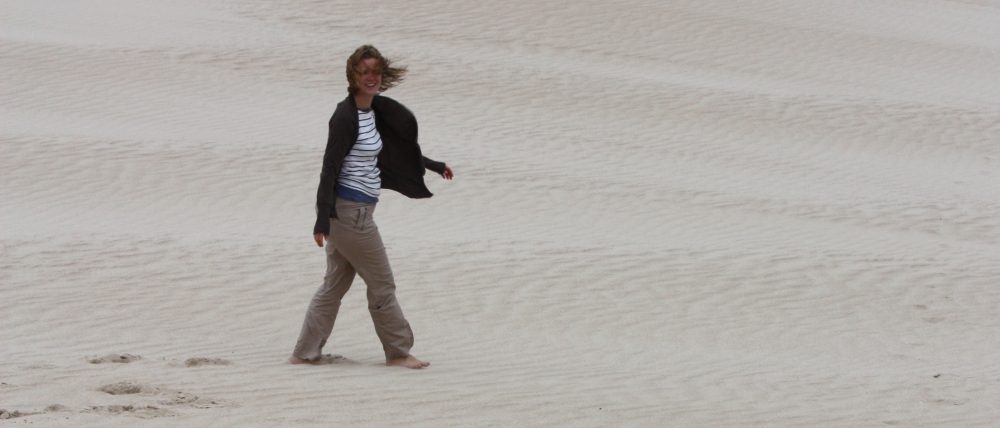
Give yourself a break

I’ve been very busy during the past couple of weeks. I’ve been preoccupied on several different fronts; some things work related, some things not, some things positive and fun, some things not so much, and some things just plain exhausting. And, to tell you the truth, I was shocked to notice that it’s been two weeks since I last posted on my blog. These two weeks have gone so fast!

Last night when I noticed how long it’s been, I thought I should quickly put a post together to publish first thing in the morning. After all, I don’t think I’ve ever gone more than two weeks between posts. But I just couldn’t bring myself to do it. I was tired, I wanted to spend my Sunday evening with my family, and to be honest, my mind was completely blank anyway. Despite all the things I have experienced lately, all the eye-opening events, and all the meaningful discussions I’ve had with people, I couldn’t think of anything to write about. I didn’t have a single idea, and had I had one, I don’t think I would have had the energy to write about it anyway.

So I didn’t. I did nothing even remotely work related last night and it felt great.

The thing is though, I like writing blog posts. I like engaging in discussions and I’ve really had some interesting ones since I started blogging. It feels meaningful and it gives me energy. At the same time, since I have readers, I don’t want to let them – you – down. I want to keep my end of the deal and post regularly just as I’ve promised. I tend to be hard on myself though; I tend to push myself, regarding anything that I have promised myself or others that I will do. Sometimes it becomes too much, but a promise is a promise, right?

You will be happy to hear that I have actually gotten better at being kind to myself. As the years go by I’ve realized if I can’t count on myself to be forgiving then who can I count on? I think this is especially important today in our hectic work cultures but also in society at large where even free time has become so streamlined and professionalized. And I think this is especially important for women. Women are taught from a very young age to be good girls and that they have to do their very best, or rather even better than that, to succeed.

But as I said, the older I get the more forgiving of myself I get, and strange as it may sound, I have started to realize that I am only human. I still do my best to keep my promises. Sometimes, however, things happen and that’s just life, and if that is the case, I ironically find that others are usually more forgiving and understanding of my situation than I am.

So with these thoughts, triggered by my need to live up to my own sometimes unrealistic standards, what I’m trying to say is be kind to yourselves. If you aren’t nobody will be, and you can probably really use a break.

Two things you need to do to change your life

The one question I get asked most often is, how does one do it? If you want to opt out, how do you figure out what it is you want to do instead and how do you take the step?

Unfortunately there is no easy answer, no recipe or magic formula to follow. However the good news is that there are things you can do.

First of all, you have to be prepared to step out of your comfort zone. If you continue the way you have within the safe realm of what you know, things will most likely not change. The other day I stumbled across an article that really hit the nail on its head. It argued that you have to do things that make you uncomfortable to find happiness and success (and it also listed what these uncomfortable things are).

Those of you who know me, and are familiar with my writing, know that I find this constant search for happiness problematic to say the least. Happiness and success are a result of something else, of doing something meaningful and something you love. We tend to love what we are good at and become good at what we love, simply because being good at something tends to be fun and if you really like doing it you generally throw yourself into it with gusto, which tends to lead to success. And research has shown that the constant search for happiness, which seems to have become a societal obsession of sorts, actually makes people less happy and less fulfilled. So they continue searching and end up in a vicious circle.

So how to we know what we love if we haven’t found it yet? To find out, here are two things you should do:

  1. You have to put yourself out there and explore. That means talking to people. Tell people that you’re looking, ask them what they do, find out more about what kinds of things, activities, and jobs there are. It’s hard to imagine anything other than what we know. That was certainly true for me before I opted out; I couldn’t really imagine working in any other way than I always had. Without talking to people and exploring you don’t even know what you don’t know. But if you reach out to find out more, worlds you didn’t even know existed will open up and you will find new activities, lifestyles, and forms of work to try.
  2. Don’t wait until you have it all figured out. I’m a very private person and this was a mistake I used to make a lot. I used to never talk about my thoughts and dreams until I had it figured out. I guess I was worried I would seem stupid or something if things didn’t turn out the way I had planned. However, I think it’s safe to say that everyone understands that plans are only plans and that they can change. The risk of waiting to tell people, or to take steps before you have everything figured out and ready, is that you may never figure it out unless you talk to people. This is related to the previous point on putting yourself out there.

What this means is, you don’t have to leap right away. You can start small while you’re still figuring it out. You might want to try something on the side, and then if that doesn’t work or you realize you don’t like it as much as you thought you would you can stop doing that and try something else. And remember: don’t stop exploring just because you don’t find your thing right away. Contrary to popular belief, when it comes to life, there is no such thing as a quick fix. You’ll get there; you just need to give it time.

And one more thing, don’t forget what Brené Brown says: you don’t need to negotiate your right to be anywhere with anyone. You are the one who decides that.

Time well wasted

I have a weakness for signs. Not the cosmic type, I don’t believe in those. I think when people look for signs, what they’re really doing is looking for confirmation for things they have already decided or already know to be true in their hearts. They see what they want to see and attribute meaning so that they get the confirmation they need.

No, the signs I’m talking about are physical signs, words written on a slab of wood or a sheet of metal. I have two hanging on the wall over my desk in my office. One says, “Wake up. Kick ass. Repeat.” and was a gift from a dear friend. Looking at it makes me feel strong and, if not fearless, then at least less afraid. The other one was a birthday present from my family and it says, “Of course I talk to myself. Sometimes I need expert advice.” It makes me laugh, and the truth be told, I do talk to myself a lot.

Not too long ago I saw a sign in a shop that said, “Every day without laughter is a day wasted.” I was drawn to this sign because I truly believe in laughter. Laughter is so important. It’s healing, it’s therapeutic, it’s the glue that keeps families together, and it’s fun. But there was something about this sign that just didn’t feel right. I realized it was the part about days wasted.

Let me set one thing straight. No day is ever a waste of time, regardless of whether it’s filled with joy, sadness, stress, or just boredom. Every day is important, a piece of the puzzle that makes up your life and who you are. We can’t go through life always laughing. Some days I, at least, definitely don’t feel like laughing and those days are important too. A day without laughter may not be a fun day, but it doesn’t necessarily make it a bad day, and definitely not a wasted day.

This whole concept of wasting time gets to me. Ever since industrialization, productivity has become a mantra; it’s become something to strive for in everything we do. Organizations are supposed to be productive, individuals are supposed to be productive, and we streamline to the point of maximizing productivity at all times. We are led to believe that anything less is a failure to live to our maximum potential. This, however, is not a truth, it’s not a law of nature; it is just the way we are conditioned to think in society. We constantly seem to weigh everything’s worth instead of letting things be for the sake of being.

As I write this, I’m lying on the couch, nursing a cold, and thinking about how I should be using my time. I’m definitely not feeling very productive. Instead of just focusing on getting better, a part of me feels pressured to at least make an effort and answer emails – even though I’m feeling too tired to work – because aren’t we sort of expected to work anyway, even when we’re sick? Even though resting will make us better faster? Productivity is so ingrained also in my consciousness that even I, who research these things, get filled with self-doubt if I don’t feel I live up to social expectations.

Well, I’ve been relatively successful at resisting the temptation to work. I have taken a well-deserved rest, and let me tell you what happened: As I lay here on the couch doing nothing, I got bored. My mind started to wander and I started thinking about that book proposal I’m supposed to be working on but just haven’t had the peace of mind to get my head around. I started to see how I want to structure the book and jotted down a preliminary table of contents. This gave me such an energy boost that it inspired me also to write a blog post. Hooray for so-called wasted time!

P.S. And yes, I’m going to write another book! I’ll keep you posted, so stayed tuned!

The discipline of a master procrastinator

I’ve never really thought of myself as disciplined. I’m actually a master procrastinator. Sometimes it can inexplicably take me forever to get around to doing something – inexplicably because the things that don’t get done are usually really not a big deal. They wouldn’t necessarily take very long to do at all if I just got around to them.

So imagine my surprise when people started telling me they really admired my discipline. It all started when I was on maternity leave with my first child and taking social psychology classes. Since I was living abroad without a network of friends and relatives to help, I couldn’t leave my baby and actually go to class, but I would study the literature at home and then go to the university to take the exams. And this is what I did: I would spend time with the baby in the morning and when I put her down for her nap I would devour as much of the course literature as I could until she woke up. Then I would spend time with her again until her next nap and then I was off again to the world of group dynamics, prejudice, dialogue, disorder… you name it I was reading it. I was tired and my house was literally a mess, but I loved every minute. Studying social psychology was something I had wanted to do for a long time, but it also provided a pretty good counterweight to the sometimes lovely and oftentimes uneventful days at home with a baby.

I was told that I was amazing, so disciplined.

Another time I heard this was when I was working on my PhD at home in a different country than the university where I was enrolled, and also finished within the designated time. People would wonder how I had the discipline. Some people talked about how they would never be able to write a doctoral dissertation at home because they would get too distracted. Well, the discipline part really wasn’t that hard. After I enrolled as a PhD student, my job was suddenly to read again and think, as much as I possibly could. The things that might have distracted me at home, were things like laundry and dirty dishes and other never ending tasks that, to be honest, I didn’t want to do anyway. No, I didn’t feel particularly disciplined; I was just doing what I really wanted to do.

The other day I attended an event where I heard Paul Auster being interviewed. What an interesting man. Paul Auster, when asked about having the discipline to write every day, said that he always thinks that’s an irrelevant question. Because it’s not a matter of discipline, it’s a matter of wanting or not wanting to do what you do. If you really love what you do, discipline isn’t an issue.

So what do we learn from this? Well, maybe if you like what you do you don’t have to worry about discipline, but if you have to force yourself to do what you’re supposed to be doing, maybe you don’t really want to do it in the first place?

But I also have to say, procrastination really isn’t such a bad thing. It’s not the enemy of productivity, nor the opposite of discipline. There is a study that shows that procrastinators are, in fact, more creative than people who don’t procrastinate. I mean if you think about it, maybe procrastination is a way for creative people to allow themselves a break to actually reflect. We don’t generally get a lot of time to reflect in society, even though we know that you need to have time to reflect to actually be able to create.

So on that note, I think I’ll have a cup of coffee and procrastinate for a while. No discipline needed for that either.

100 reasons

My opting out and in journey has been going on for years now. I usually say it began in 2009 when I left my job in consulting to work on my PhD, but really it started way before that. It had been going on in my head, more or less consciously, for years, as I would ponder whether or not this was it or if there was some other lifestyle out there for me.

And I have to say, despite the ups and downs of academic life, I don’t regret my decision at all. I love doing research – more that I realized I would when I jumped – and although there is a lot of uncertainty regarding the future, I’m thoroughly enjoying where I am right now and have faith that when the time comes (read: when my funding ends) one step will lead to the next and new opportunities will appear.

This blog has been an important part of my journey. As I’ve negotiated my terms with myself and others, and thought about what compromises I am and am not willing to make; the opting out blog has been a space where I have been able to do things my way. I have been the one who has decided what to write, when to write it, and how to go about it.

To me the blog is about opting out on several levels. I write about my research around opting out and anything related to that, and I write about my own opting out experiences. But part of doing it on my own terms is that I don’t only limit my posts to opting out. I opt to also write about other things, things that I think are important or things that I have been thinking about, and I do so in whatever way I please. Having this ability to be the one to decide all this has been both liberating and empowering. It has been my breathing space and the one place that has been all mine to do with as I please.

About a year ago, I was asked to think about my blog, about what and how I write and who I write for – my audience. These questions were a part of a larger process and were definitely relevant. The thing is though, that as I was asked to analyze my blog, I started to find it more and more difficult to write my posts. From having had a situation where texts just flowed from my head through my fingers onto the screen whenever ideas came to me, writing suddenly became a chore and just one more thing on my to-do list. I continued writing anyway because I wanted to keep updating my blog regularly, if not for myself then for my readers, but it sort of stopped being fun.

Well, I’ve been thinking about this and I’ve come to the conclusion that not everything has to or even should be analyzed and quantified. I could probably be more strategic in my writing, but what good would that do me if takes all the fun out of it and kills my creativity? So my conclusion is that this particular blog needs to be left alone, as it plays an important role for me just the way it is. Besides, I do believe that if I write what I feel like writing and it makes me happy, my posts will inevitably be better and more interesting to read.

So I’m going to keep writing what I want to write, when I want to, and for as long as it brings me joy. Besides, this is my 100th blog post. That if anything is 100 reasons to continue.

A touch of humanity

A dear friend of mine is just about to embark on a new exciting journey. She is going to retrain as a nurse and I am so excited for her. She is following her heart and her dream.

She is doing this after having left a career in business, and what I find so interesting is that she isn’t the first person I know who has decided to become a nurse after having opted out of a corporate career. Not too long ago I interviewed a man who had done the same. And he apparently knew of a whole bunch of people who had opted out of different careers to become nurses. I quote:

“When I started [studying to become a nurse] I was 45 years old, but surprisingly I wasn’t the oldest in the group. As a matter of fact, just in my course, there was a small group of older men like me who wanted to change careers. So I’m not really a unique case.”

He’s right; he isn’t a unique case. Come to think of it, although everyone didn’t choose nursing, most of the people I have interviewed for my research – both men and women – have left corporate careers to do something that involves caring for and helping people. Two became life coaches. A few became teachers, teaching everything from preschool to college. One started working with immigrants, giving legal advice. One became a nutritionist and works with schools to make sure kids are provided with healthy food. A few started working pro bono and many are involved in charities of different kinds. I could go on.

All of a sudden I realize that I see a pattern here. A common denominator seems to be opting in to work where they can help others. And I don’t think this is a coincidence. I do, however, think it says something about the corporate environments they chose to leave.

We focus so hard on productivity and profit, and organizations are streamlined to the point where we seem to forget that they are made up of people; people with human needs. When people finally have enough, when whatever happens that pushes them to take the step and leave a career behind, they choose a road that provides them with the coherence and meaning that they didn’t get in their previous jobs. And apparently also one that provides a touch of humanity.

Not only that, all of them, every single one of my interviewees, talk about the people in their lives. They talk about family and friends, and about having a job and a lifestyle that allows them to be there for those who are important to them.

And that’s what I’m going to do now. I’m going to take some well-deserved time off to spend with my loved ones. Because to be honest, as clichéd as it may sound, it really is the people in my life that make life worth living.

I’ll be back in August with more blog posts. See you then!

Sometimes slow is faster

I remember when I was working on my PhD. I would get so stressed over how long everything took. As I wrote chapter drafts, I couldn’t believe how incredibly slow the writing process was. Academic writing is a very particular and exact art form, not like jotting down a blog post. Well anyway, it felt excruciating at times and what I thought would take one week, took two or three, and then I would wait for feedback, after which I would have to rewrite parts… At a certain point I thought I would never finish, and never make the four-year deadline.

Well I did finally finish, but the thing I realized as I was working on my thesis was that the faster I tried to work, the slower it went. When I rushed, which I tend to do when I get stressed, I ended up having to rewrite more, not to mention rereading and having to go over my sources again more carefully. In other words, rushing really slowed my process down. So when stressed, I forced myself not to let my impatience get the better of me, and my mantra became “it has to be allowed to take the time it takes”.

I know this doesn’t sound very profound, but to me it really was. Because things do just take the time they take, whether it’s writing or learning a new skill or recovering from an illness. In this age of quick fixes and instant gratification, this can be hard to accept, but sometimes we just have to.

A while back as a group of us at work were fretting over looming deadlines and too much too do in too little time, a friend and colleague recommended a book by Maggie Berg and Barbara Seeber titled The Slow Professor: Challenging the Culture of Speed in the Academy. This book is about academic life, but many of the points the authors make are definitely relevant to all of us.

The authors talk about what they call a “culture of speed”. In fact it is exactly this – the sheer speed of things – that many sociologists have argued is what makes contemporary life different from any time we have ever experienced before. The problem as Berg and Seeber see it, is that there is a constant pressure to increase productivity, which means that work tends to take over what should be our down time. As a result we end up having to manage also our free time in order to squeeze everything in (work, spending time with kids/friends/family, exercising, having fun…). And this, in turn, can lead to stress, a feeling of time poverty, and even mental health issues, in addition to stifling creativity, which at least for an academic trying to write is absolutely vital.

Besides, we cannot constantly create or write, we also need time to reflect so that we actually come up with something to write or create. We need quiet down time not only to recuperate, but also to actually be productive. Productivity does not necessarily come from doing more.

So let’s make sure we have enough down time this weekend so that we can be more creative and productive and whatever else it is we need to be.

Tolerance doesn’t do the trick

Times have changed, thank goodness. Sometimes we take a few steps forward, sometimes a few steps back, but all in all our world is becoming increasingly tolerant. In Finland same sex couples now finally have the legislated right to get married. A bit late in the game I have to say considering how progressive my country has been compared to others when it comes to issues like gender equality, to name one. Although also in that area we sometimes take steps forward and sometimes backward. But the general direction is still, thankfully, forward. In the US, however, we see threats of backsteps on many fronts, and although this is really worrying, not to mention scary, and something many of us are painfully aware of, that is not what I am going to write about today.

I’ve been reading a book about choice, namely The Art of Choosing by Sheena Iyengar. Choice is an interesting thing. It is one of the concepts that defines the very fabric of being in our individualist society. How much choice we really have or whether we just think we have complete freedom of choice is constantly up for debate, but the rhetoric and idea of choice is, either way, central in contemporary society.

Choice gives us a sense of agency, a sense that we have control over our lives and how we live our lives, which according to Ivengar is important for our sense of wellbeing. Although it’s worth mentioning that research has also shown that too many choices can have the opposite effect. It can just be overwhelming and create anxiety over whether or not you’re making the right choice. But still, on a whole, the idea of free choice is something that appeals to most of us.

So how ironic isn’t it then, that so many people are still reluctant to let other people exercise this concept that many consider a fundamental right? I’m thinking about people in the HBTQ community for example. The message they often get is you can choose what you want as long as you make the same choice as everyone else. I hate to break this to you, but that’s not freedom of choice.

But as interesting as this book on choice is to me, there is one thing that Iyengar writes about tolerance that in all it’s simplicity was so profound to me that I had to underline it:

“While tolerance is certainly better than judging every other culture from the fixed point of one’s own, tolerance has severe limitations. Rather than promoting conversation and encouraging critical self-reflection, it often leads to disengagement: “You think your way, I’ll think mine, and we don’t have to interfere with one another.” … We cannot tolerate one another by shutting the doors because our spaces, real or virtual, intersect as never before.”

And isn’t that just the truth. All this talk about tolerance is good to a point, but it’s not enough. Tolerance is ‘you do what you want and I won’t bother you as long as I don’t have to be a part of it.’ Do you see the problem? It’s not going to make people get to know others who are different from them. It’s not going to help integrate people in the community. It’s not going to make sure everyone has the same fundamental rights. In short, it’s not going to help people understand, just tolerate.

Tolerance just won’t do.


Quality time is unstructured

My daughter and I got back from a long weekend in Paris a few days ago. This was a trip that we had been talking about taking together for years, and I’m pleased to say it turned out to be everything we hoped it would. My daughter is the best company and the spring weather was absolutely gorgeous. But the best thing was – and we agreed on this – that we had nothing scheduled other than our flight back home. We did what we felt like doing at the pace we felt like doing it with no pressure to move on to the next thing until we wanted to. We ate whatever we were in the mood for whenever we felt hungry. If we felt tired we went back to the hotel, but it didn’t matter if it took forever getting there. No one was expecting us to be anywhere at anytime. And I tell you, this sounds simple enough, but it was the most liberating feeling.

This is something I often hear people who opt out or want to opt out say. They wish they didn’t have to be in such a hurry all the time. And we are very much in a hurry all the time in our day-to-day lives. I at least feel like I am. I sometimes wish I could clone myself because I need to be in so many different places at the same time. And it’s not only us; it’s also our children. Their time is very structured with school and hobbies and whatnot and we raise them to fit in to this hectic world, which seems to be spinning faster and faster.

I went to a seminar the other day and heard Professor Anna Rotkirch talk about family time management. According to her, and I’m so glad because I’ve been saying this for years, when it comes to time with your children quality is quantity. Just spending time with your children – and this goes for both mothers and fathers – is so important. This time does not need to be structured, it does not need to involve actively engaging your children in activities; it just means being there. Research has shown that this has such a great impact on children and their development throughout their lives, and the positive effects even ripple down to the next generation.

One of the things Professor Rotkirch recommended was something known as the 15 minute technique. This technique has been developed for parents to use with their children, but really it works with anyone. It involves being with your child (or whoever else) for 15 minutes without an agenda, without any structured activity, and without telling or teaching in any way. Just being there.

It is hard at first. When we’re constantly on the go, constantly having to get things done, doing just nothing tends to make us antsy. But apparently, if you work through that nervousness, just being together works wonders. If we do this, the person we are with might open up to us and talk about what he or she is thinking and feeling. And how wonderful for the person on the receiving end of this 15 minute technique to be able to do that, to talk about what they want to talk about. And this is something we might never experience if we’re always on a schedule or have an agenda.

I’m not going to ask you to fit one more thing into your busy schedule, because whenever I see recommendations and lists of things to do, it just tends to overwhelm me. I am a true believe in doing what works for you. But I will say this: unstructured time really is the best thing.


Learning how to roll with it

I had one of my worst interviews ever a while back, which also turned out to be one of the most important in my study on men opting out.

A friend of mine put me in touch with a man who opted out of a career to become a chiropractor. He had graciously agreed to participate in my study and the next step was for me to contact him in order to set up an interview. Well, that sounds easy enough, but this guy turned out to be very busy and getting a hold of him was extremely difficult. Finally after what was literally months, he suggested a time to meet. Fantastic! The timing wasn’t optimal for me but no problem; with some minor rearranging in my schedule I made it work.

So we had a time, so far so good! However, he didn’t want to meet in any of the places I suggested (interviews are good to conduct in quiet and private places so that the interviewee can speak openly and freely without worrying about anyone else hearing), he wanted to meet in a shopping mall that was on the way for him between appointments. At this point I thought I need to take whatever I can get and agreed.

The next day I drove to said shopping mall to see if there was a café with any remotely private corners or nooks where we could conduct the interview and I found one which actually didn’t seem so bad. I was very pleased; finally this was going to happen! He said he only had an hour, but being the seasoned interviewer that I am, this didn’t worry me. An hour is fine; much data can be collected in 60 minutes.

Well, the day finally came and I set off to the shopping mall about 30 minutes ahead of schedule to be sure to get a quiet table. I get there, I order coffee, and I sit down at the table right at the back of the café. It was private, it was quiet, and there really weren’t that many people there either. This seemed like it was going to work out after all.

About 15 minutes into my coffee, the café starts to fill up (who knew this café was so popular?!) and music starts playing, pretty loudly I might add. The minutes pass and I look at my watch. It’s time. He should be here. I realize I have no idea what this man looks like but right then a man walks in. I stand up and he walks over to the table next to mine where someone is waiting for him. False alarm. I sit down and wait. It’s five past by now and my phone rings. It’s him. He says he’ll be there in 10 minutes. Argh, that will only leave us with 45 minutes for the interview, but okay that’s fine, it’s better than nothing.

About 17 minutes later a man comes in, he’s looking around, I think that must be him so I get up and say his name. Bingo! He’s here! But right then I see he has a kid in tow. I really like children, don’t get me wrong, but as interviews tend to be private – which is what you kind of hope for as a researcher – bringing someone along is usually not a good idea. I sigh quietly to myself but smile. It’s okay, I’m not letting this faze me; he’s finally here. The kid is hungry and needs something to eat, they go to the counter and there is nothing he wants. He finally settles for a soft drink, the dad has some coffee, and 25 past the hour they’re finally making their way to my table. We now have 35 minutes left of the interview.

No problem, we can do this, 35 minutes is better than nothing. The music is still playing loudly, but whatever, my dictaphone has a really good mike. We start the interview and I realize that this man, ironically, has the softest voice of anyone I have ever met. I realize I can hardly hear a word he’s saying. I pray that the mike is picking up his voice anyway and I start reading lips like crazy.

The good news is that the café and the kid don’t seem to bother him at all. He’s very open when he talks about his experiences, but still I feel a bit disappointed. His story doesn’t seem to fit my understanding of opting out. Maybe there was something he wasn’t telling me? Maybe the café setting was a mistake after all, or maybe my lip-reading skills just weren’t up to par.

All this was going through my head when he suddenly said something important. This man practises aikido in his free time. He explains to me how in aikido you can’t resist whatever is coming at you, you have to accept it, and use that force to your advantage. You have to acknowledge and embrace it and use it for your next move. In other words, you just have to roll with it. He explained how this is a philosophy he adheres to in his practice as a chiropractor but also in life.

Wow. It triggers the most amazing light bulb moment in me. I’m not exactly new to research, but all of a sudden I realize I had been making the mistake that so many people make, but that you have to be really careful not to when doing research. Instead of really listening, I had been confirming what I already knew and trying to fit my male interviewees into the model I developed for my research on women opting out. After all, I am the expert on opting out. The thing is, although some of the men seem to fit into my model, all of them don’t, and at the time I wasn’t really exploring that possibility. I was just trying to confirm what I already knew.

No more. I still haven’t listened to the recording of that particular interview so I’m not sure if my dictaphone actually picked up any of what he said. But regardless of that, this was probably the most important interview I’ve had so far during this research project, and I am so grateful that this man took the time to teach me the importance of acceptance.

This goes for any situation in life, whether personal or professional. You may think you know what a person is saying or what he or she needs; you may think you know the best way forward. But if you don’t listen you may be totally off and things will, most likely, just backfire. If you stubbornly stick to your own agenda, you’re not going o get very far, or at least you’re not going to get there in the smoothest nor most productive of fashions.

They really are very wise, those people who practise aikido. We could all learn from them.