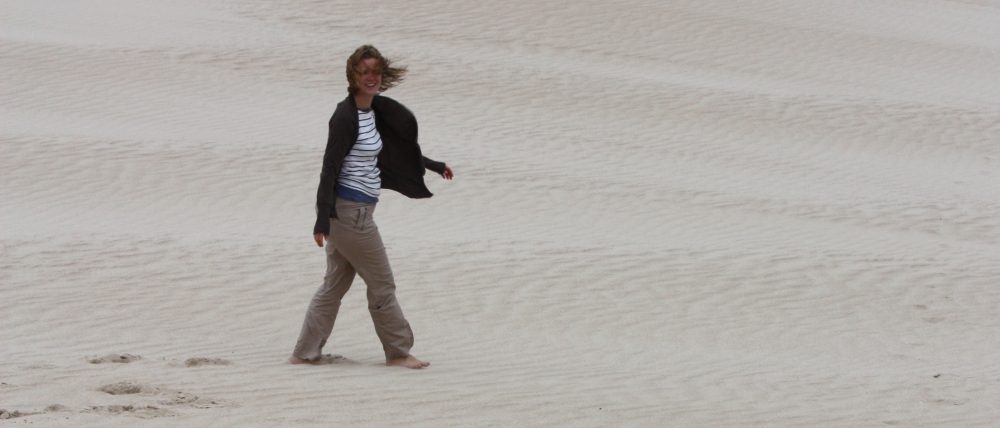
Living in the moment

Everything seems to be about metrics these days. In the name of prosperity, we are encouraged and pushed to continuously time, weigh, and assess ourselves and our accomplishments. And I have to say while I find it quite fascinating, I frankly also find it a bit off-putting.

It first struck me many years ago when I was pregnant with my first child. I was constantly being weighed and measured during my prenatal check-ups, which I of course understand. We want our children to be born healthy and the prenatal care in Finland is among the best in the world, and Finland also boasts one of the lowest infant mortality rates globally. However, I found it slightly irritating at the time because it was always followed by a discussion that invariably made me feel inadequate. If the baby had a growth spurt since my last check-up I would get a talk about how I shouldn’t eat too much and how soft drinks just make the baby fat, and if the baby hadn’t put on a lot of weight I would get a talk about needing to eat properly. It seems to me that nothing in this world naturally develops in a neat linear progression, babies certainly don’t; and as for my pregnancy, I felt good, I didn’t gain too much weight (I never drank soft drinks because I just didn’t want to), and at the end of the pregnancy I gave birth to a healthy baby. But I felt frustrated to be so scrutinized by health officials, even though everything was fine. And for my baby, it seems little has changed. In school her height and weight is constantly followed up (as it is for all students) and is accompanied with a discussion of her eating habits. Public health care in Finland is of high quality and this is of course an admirable and important attempt to capture bad habits and possible eating disorders, of which my child by the way has neither, but it just strikes me that in this case these discussions make an issue of something that is not.

However it isn’t only about health care. In today’s society we are so obsessed with the concept of efficiency and growth that we measure everything ad absurdum. We do it at work and we do it in our free time. We measure the minutes of the day and the week and how often or how much time we spend doing or consuming different things. We measure how far we go and how fast we move. We count our friends and connections and how many likes we get. It goes on and on and every additional little thing we are told to measure adds a bit to my stress levels because it is just one more thing to follow up.

But it’s interesting, because while we are obsessed with becoming faster, better, and more efficient, research tells us that this constant streamlining actually defeats its purpose. According to scientific studies, it turns out that efficiency comes from slowing down, reflecting, and being in the moment. For example, the other day I read research conducted by scholars from Princeton and the University of California that shows that taking notes by hand is, contrary to popular belief, much more efficient than typing them electronically. The reason is that when we type on a computer, we are so fast that we often copy things down word for word, and when we do that we don’t really think about what we are writing. When we take notes by hand, on the other hand, the going is so slow that we need to listen, understand, think about, and formulate our own interpretation and summary of what the speaker is saying. When having to reflect over what is said, our understanding is greater and we also remember it better. In other words, in this case, slower is better.

I also recently read about Emma Seppälä’s research on happiness and success. Seppälä, a Stanford researcher, argues that by slowing down and being in the moment we can be more productive than if we are constantly focusing on the future and striving to become bigger and better. Apparently we are more creative if we aren’t under constant pressure to be top performers, and as a bonus, staying in the moment and being present is also found to increase feelings of happiness. You can read about this in her book The Happiness Track, although ironically the book’s selling point is that if you read the book and apply the science of happiness you can be more successful. See what I’m saying; we live in a culture of constant striving and streamlining.

So no, I’m not personally very interested in measuring my work efforts or my free time – although I do have plans and dreams, don’t get me wrong. But I try to live in the moment simply because if I don’t, I feel like time just slips through my fingers. If I don’t pause and reflect over where I am and what that feels like, it’s almost as if I lose chunks of time that I barely remember experiencing.

On that note, what a beautiful day it is; I think I’m going to enjoy this moment and go for a jog. I don’t really care how far exactly I will run nor how fast; I’m not training for anything specific. I just need to get up and move after sitting glued to the computer screen and I want to be outside in the crisp autumn air. Just that, and knowing that I will break a sweat and be somewhat out of breath when I get back, is good enough for me.

My definition of success

Have you noticed how when you meet new people, the first thing they tend to ask is “What do you do?” I remember a woman I interviewed once who was very frustrated by this. She had opted out but not yet figured out what she was going to do next, and in the meantime she was temporarily at home with her kids. This question frustrated her so much because she couldn’t identify with being a stay-at-home mom, she felt an acute loss of identity and extremely self-conscious about not living up to expectations. ‘Just’ being a stay-at-home mom didn’t feel important enough.

Well, the fact that we don’t really value nonpaid care work is very problematic. I mean, anyone who has been at home with children knows that being a stay-at-home mom is definitely not doing nothing, even though those posing the question aren’t just wondering what you do, but what you get paid to do outside the home. But that aside, I have to say that in a way I really get why there’s an interest in what it is you spend most of your time doing, because aren’t we sort what we do? And now I don’t mean professionally, I mean in general. Without activities and actions, what would our lives really consist of?

Inspired by last week’s post, I’ve been thinking about what exactly it is that makes my life successful. First I thought about my work. I’ve managed to negotiate a pretty good deal for myself at work and in a way I guess that should make me feel successful. But to tell you the truth when I really think about it, having a deal that reflects my worth is actually more of a hygiene factor than anything else. If you come from the business world, you’ve probably heard of Herzberg’s two-factor theory of motivation. There are hygiene factors like working conditions, a salary, and job security, and then there are motivators, which include recognition, a sense of achievement, and personal growth. You feel dissatisfied if your hygiene factors aren’t fulfilled, and if they are fulfilled you just feel neutral – neither satisfied nor dissatisfied. It is only if your motivators are fulfilled that you actually feel satisfaction.

And although I should feel pretty satisfied about getting a good deal, especially considering that women are generally underpaid and as research has shown not as good at negotiating or knowing their worth as men, getting what I deserve is really just a hygiene factor. Anything less would simply be unsatisfactory. What motivates me and makes my life and work a success is something completely different.

As clichéd as it sounds, I came to the conclusion that it is all the things I do and the people I have in my life that bring me joy that make my life feel meaningful and successful. I love that I can make a living reading and writing about things that interest me and that I feel are important. I have so many wonderful meaningful relationships with people close to me and I love that I have the time and flexibility to nurture these relationships, not to mention all the laughter and good conversation! I have produced two of the most delightful human beings I know and watching them grow is definitely one of my favorite things. Also, having a good relationship with them feels like a huge success. I love that I have the peace of mind to slow down enough every now and then to see all the fantastic beauty around me – that is just good for the soul. And I am able to have the most satisfying hobby that challenges me while also allowing me to cuddle with half a ton worth of furry creature (horse-back riding).

Notice how all of these things are activities? It is the things I do and the people I’m actively with which make my life meaningful, and yes also successful. None of the things I’ve listed are about money or prestige. Don’t get me wrong, money is important, we need money to live and to eat, and it is important to get that raise when you deserve it. But for me at least, these are just hygiene factors. It is rather the things that bring me joy that make my life successful.

Don’t sweat the small stuff

My father passed away a few weeks ago. We were close and I miss him terribly. This is the first time I’ve lost someone this close to me and although I’ve lost beloved grandparents and other people from my extended family, it’s just different when it’s your parent. The grief is acute and physical and it just feels hard to comprehend.

But it really puts things into perspective.

I think about all the people I’ve met during my journey from the business world to academia. The people I’ve talked to about opting out, whether casual discussions at parties or conferences or interviews I’ve conducted for my research. A common denominator for all opting out stories is that something has happened in these people’s lives – a crisis of some sort – that has helped or pushed them to take the step and make a real change instead of just talking or dreaming about it.

And it’s true, a crisis or traumatic event may propel a person to make a change as well as trigger some serious soul searching. If everything goes well (and this is important because let’s not romanticize crisis here; we have to remember that a crisis is no walk in the park and some people don’t recover) it may trigger personal growth and create a feeling of authenticity. As a woman I’ve interviewed said, “ You just don’t waste time on anything that doesn’t matter anymore.”

I’m finding that I can really relate to that right now. I just can’t be bothered sweating the small stuff. Intrigue at work? Not interested. Disagreements and misunderstandings? Can’t be bothered. Students who complain? I refuse to let it get to me. Really though, I’m dealing with more important stuff in my life right now.

And although I’m sad, I’m also finding that I quite like not getting fazed by what’s not important. I feel like I see things more clearly. I just hope it lasts and that I continue being able to put things into perspective. Although I suspect as time passes I will gradually slip back into getting stressed over work and deadlines like I usually do. Because that’s life, nothing is constant and opting out isn’t forever, it’s cyclical.

I wish I could put perspective in a jar and then in the future, when I need to, breathe some in and not sweat the small stuff again.

Sleep your way to the top

Now this week’s title must have made you a least a little curious. I have to admit, thinking up catchy titles for my posts – titles that will actually make people curious enough to click through to my blog – isn’t always my strong suit. So I’m especially pleased with this one. Although before you get too excited I have to confess that this blog post is not about sex. It’s about sleep, among other things.

I saw a video clip of Sheryl Sandberg’s Lean In interview with Arianna Huffington the other day, and ‘sleep your way to the top’ are Huffington’s words. According to Huffington we all sleep too little due to the constant pressure and need to be efficient. However, and the experts all agree on this, a lack sleep does not lead to efficiency. Sacrificing sleep in the name of productivity actually makes us less productive. So if you really want to succeed – if you want to make it to the top – you really need to get enough sleep.

Another thing Huffington brings up is that organizational culture is designed by men and fueled by burnout. Well, I’m very familiar with the concept of masculinist career models and working cultures. It’s true, prevalent career models have been designed by men for men. Whether they represent how all men want to work is a different question, but this is fact. However the idea that it is fueled by burnout was a new thought for me, and a very disturbing one at that. I know working culture can be extreme, and I know that in this day and age the ever more hectic pace and financial uncertainty take their toll. In fact according to the Kelly Global Workforce Index about half (!) of the world’s workforce is reportedly unhappy, mainly due to downsizing and uncertainty, and according to the Harvard Business Review middle managers are among the most unhappy. So I guess it should come as no surprise that also burnout is a real problem.

Huffington goes on to explain that because of this, sleep is a feminist issue and that it is women who need to lean in and reach top positions in greater numbers so that they can change working culture from the inside. So instead of opting out, according to Huffington at least, women need to stick around, gather in greater numbers, and change the environment.

That’s good, I do agree. Corporate life needs to change and we need to change it. I’m unsure of whether women alone can change it however. Women so quickly get assimilated by the culture and need to adopt masculinist norms and ideals in order to make it to the top, and because of this women aren’t necessarily good role models for other women. And the reason women don’t help each other enough as much as you’d hope may also be related to this. In part it’s due to a fear of being stigmatized in an environment where women constantly need to prove themselves worthy.

But either way, I don’t think this is only a women’s issue. I think both women and men need to and will change corporate culture together. Masculinist work cultures don’t suit all men either and like many including me argue again and again, they just haven’t kept up with the times. So yes, it’s a feminist issue, it’s a women’s issue, and it’s also a men’s issue. It’s a question of wellbeing.

But just the thought of whole societies sleepwalking through life is simply horrific. Let’s get more sleep people! Let’s sleep our way to the top. Or wherever it is you want to go.

P.S. Watch the video clip. Huffington says some very wise things about napping too. As a matter of fact, I think I might just take a nap myself.