Do what inspires you

I started working on my second book yesterday. Last week I had been thinking about what the main areas of research are for my current research project on men opting out and I realized, as I jotted down a list of bullet points, that it kind of looked like a possible table of contents.

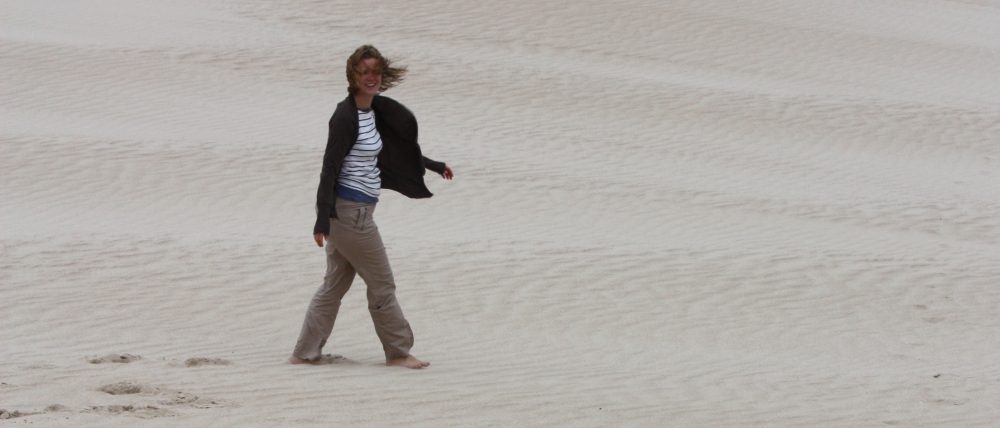
Well I’ve been mulling this over for a few days now and yesterday morning I just felt super inspired. All of a sudden I just knew what my first sentence was going to be. I could barely wait until I got back from driving my kids to school and I needed to write it down before I forgot it. I threw my jacket on the extra chair in my office and I barely had time to sit down at my desk before I started writing.

After my first sentence I hesitated for a second. I haven’t even published my first book yet; I’m still checking the proofs before it can go to print. I’m also working on a paper and a book chapter, both of which have deadlines within the next week or so. I have other papers that need to be written once I have submitted these and I have a bunch of theses to read through and evaluate… And what do I do? I start working on the one thing that I don’t have to get done any time soon. Writing a book based on my men opting out research is in my research plan, but the project doesn’t end until 2019.

But still, this is what I started working on. Because right then, in that instant, I felt inspired and I knew exactly how I wanted to start my book. I knew what story I wanted to tell. So I sat down and produced the first two pages in about half an hour.

When I think about it, this is what I usually do. Despite looming deadlines and long to do lists, if I feel inspired to do something else work-related (especially if it involves writing, because no matter what, I always have things to write), I just put everything else on hold and do that (unless of course it’s a matter of life and death or a student graduating or something because then I will put my inspiration on hold and just get on with it). Because doing what inspires me and really having flow feels so great and gives me so much energy that the inspiration and energy I get from that spills over on to everything else I have to do.

And needless to say, yesterday was one of the most productive days I have had in a long time. I was, and continue to be, so excited about this new book that everything I did yesterday, I did with focus and drive. And it all felt more fun, more meaningful and just easier.

Note to self: when in doubt, do whatever inspires you the most.

My definition of success

Have you noticed how when you meet new people, the first thing they tend to ask is “What do you do?” I remember a woman I interviewed once who was very frustrated by this. She had opted out but not yet figured out what she was going to do next, and in the meantime she was temporarily at home with her kids. This question frustrated her so much because she couldn’t identify with being a stay-at-home mom, she felt an acute loss of identity and extremely self-conscious about not living up to expectations. ‘Just’ being a stay-at-home mom didn’t feel important enough.

Well, the fact that we don’t really value nonpaid care work is very problematic. I mean, anyone who has been at home with children knows that being a stay-at-home mom is definitely not doing nothing, even though those posing the question aren’t just wondering what you do, but what you get paid to do outside the home. But that aside, I have to say that in a way I really get why there’s an interest in what it is you spend most of your time doing, because aren’t we sort what we do? And now I don’t mean professionally, I mean in general. Without activities and actions, what would our lives really consist of?

Inspired by last week’s post, I’ve been thinking about what exactly it is that makes my life successful. First I thought about my work. I’ve managed to negotiate a pretty good deal for myself at work and in a way I guess that should make me feel successful. But to tell you the truth when I really think about it, having a deal that reflects my worth is actually more of a hygiene factor than anything else. If you come from the business world, you’ve probably heard of Herzberg’s two-factor theory of motivation. There are hygiene factors like working conditions, a salary, and job security, and then there are motivators, which include recognition, a sense of achievement, and personal growth. You feel dissatisfied if your hygiene factors aren’t fulfilled, and if they are fulfilled you just feel neutral – neither satisfied nor dissatisfied. It is only if your motivators are fulfilled that you actually feel satisfaction.

And although I should feel pretty satisfied about getting a good deal, especially considering that women are generally underpaid and as research has shown not as good at negotiating or knowing their worth as men, getting what I deserve is really just a hygiene factor. Anything less would simply be unsatisfactory. What motivates me and makes my life and work a success is something completely different.

As clichéd as it sounds, I came to the conclusion that it is all the things I do and the people I have in my life that bring me joy that make my life feel meaningful and successful. I love that I can make a living reading and writing about things that interest me and that I feel are important. I have so many wonderful meaningful relationships with people close to me and I love that I have the time and flexibility to nurture these relationships, not to mention all the laughter and good conversation! I have produced two of the most delightful human beings I know and watching them grow is definitely one of my favorite things. Also, having a good relationship with them feels like a huge success. I love that I have the peace of mind to slow down enough every now and then to see all the fantastic beauty around me – that is just good for the soul. And I am able to have the most satisfying hobby that challenges me while also allowing me to cuddle with half a ton worth of furry creature (horse-back riding).

Notice how all of these things are activities? It is the things I do and the people I’m actively with which make my life meaningful, and yes also successful. None of the things I’ve listed are about money or prestige. Don’t get me wrong, money is important, we need money to live and to eat, and it is important to get that raise when you deserve it. But for me at least, these are just hygiene factors. It is rather the things that bring me joy that make my life successful.

Mindfulness on my mind

I attended an interesting research seminar yesterday on mindfulness in the workplace. I have to admit, I was skeptical. I don’t really believe in the mindfulness and positive psychology hype we’re seeing pretty much everywhere (see The search for happiness or Help that just isn’t helpful). And although mindfulness can be good in many ways, I just don’t believe that it is the answer to everything.

It’s on everyone’s lips everywhere. Workshops get organized; consultancy companies specialized in mindfulness seem to pop up right and left. And although I sort of automatically get put off if everyone is doing or talking about something (I know it’s silly, but it’s true…), curiosity got the better of me. I wanted to know what exactly we’re dealing with here. And, in addition, since I research contemporary society and social change, I figured I really need to find out what this mindfulness craze is all about. Why exactly does it appeal to people so much? And why now?

Well, I have to say, I’m glad I went because I really enjoyed the talk. And the fact that the speaker had us meditate in our seats in the middle of an otherwise busy day was an extra bonus. But what struck me was how many parallels there are between my research on opting out and the speaker’s research on meditation and mindfulness. There are three things in particular: choice, control, and crisis.

He talked about being able to break our automatic behavior and choose our responses. He talked about the ability to control our attention, our reactions, our thoughts, and our feelings. And then he talked about crisis; about his own crisis that lead him to start practicing meditation, and the crises of the people he interviewed for his study. They had all experienced a personal crisis that led them to start meditating.

Now, this isn’t rocket science and you may find it obvious, but for me it was extremely interesting because these are exactly the things that keep coming up in my research on opting out: choice, control, and crisis.

The rhetoric of choice is very strong in our society. In a reality that often feels chaotic and overwhelming, the idea of free choice is an attractive one. It provides us with a sense of agency – a sense of control in a world that feels like it’s spinning out of control. And in a society where individual choice is key, where we believe that we are what we make of ourselves, and where we alone are responsible for that, the idea of choice has become a part of the very fabric of who we are.

But crisis is also interesting. Yes, a crisis will often lead to a re-evaluation of one’s lifestyle, and maybe push someone to opt out or start meditating, but there’s more. Contemporary life is defined by constant crisis. According to Anthony Giddens (author of Runaway World: How Globalization is Reshaping Our Lives) crisis today is no longer simply an interruption, but an on-going state. We live in a risk society, where we are painfully aware of all the risks we face globally, in part due to media broadcasting every catastrophe and every act of violence in full color to all corners of the globe. This is despite the fact that contemporary life in many ways is less risky that it was before, but that is not how we perceive it.

So if mindfulness promises choice and control, maybe it is not so surprising that more and more people are becoming interested in it.

And I have to say, I did enjoy the seminar. I do admit that mindfulness or meditation can be good in some situations. It is just that in this day and age, we sort of go overboard with everything – moderation isn’t exactly our strong suit – and we do this with the idea of mindfulness too. All of a sudden it has become the answer to everything. But it’s not.

So to finish I will just say, too much of the good is just that: too much. Even when it comes to chocolate.

My five-minute diary

A friend of mine challenged me about a month ago. She challenged me to start keeping a five-minute diary. Apparently the five-minute diary is an established concept where you at bedtime, and possibly also in the morning I can’t really remember, spend five minutes writing down positive thoughts or the positive things you’ve experienced during the day. Just quick bullet points. The reason she suggested it was that I was talking about how when thing are very hectic, and let’s face, in this day and age they mostly are, I feel like everything I experience during the day just disappears from my consciousness. I may be very present in the moment but then when I move on and start doing something else it almost feels like it never was. So she suggested writing these things that I wanted to remember down in order not only to be able to actually remember them, but also to give me a chance to reflect.

Well, it sounded like a good idea to me so I accepted the challenge, but a modified version of it. I don’t like the idea of just writing down positive thoughts. I’m interested in all my thoughts and experiences, whether positive or negative or something else. It is not only the positive that is meaningful. Without reflecting over the whole range of emotions I experience, I don’t think I would ever grow as a person, and honestly I think it would make life kind of boring. Besides I find that it is especially in the contradictions that real learning and development takes place. It is in those moments that you actually learn something about yourself.

This constant striving for positivity that you see all over the place gets to me. Sometimes I see 365 days of positivity challenges circulate, sometimes it’s three positive things per day seven days in a row. Positivity is positively all the rage in this day an age. It actually stems from the positive psychology movement that came about at the end of the 1990’s about the time motivational speaking became so popular. Positivity became the answer to career success, to health, to life. However, although being positive is a good thing in many situations, and I would say I’m generally pretty optimistic myself, there really isn’t a lot of empirical evidence to support that positive psychology really works. On the contrary, it is argued that striving for constant positivity can, instead of leading to success, actually make people feel like failures when they just can’t live up to expectations and be positive all the time because they are experiencing the whole range of emotions, which is natural and necessary in life. (See The search for happiness for more on why this is problematic.)*

So I accepted the challenge, but with modifications. I said that instead of listing only positive things, I would write down the three most important things or thoughts that I experienced each day. And that is what I’ve been doing almost every evening for the past month or so. Sometimes I forget, but mostly I don’t. It doesn’t take long although I sometimes have trouble sticking to only three points, so I’ve discarded that rule. I write as many points as I want; sometimes it’s three and sometimes it’s more, but I don’t think I’ve ever written more than five or six. Sticking to bullet points is actually quite liberating because it keeps it short and I don’t try to outdo myself composing well-written diary entries, which I wouldn’t have the energy to do every evening. Sometimes my points are work related, often not. Sometimes it’s just something beautiful that I’ve seen or an interesting thought I’ve had. Sometimes I write about positive things or things I’m thankful for, sometimes it’s things I’m frustrated or feeling very ambiguous over. I don’t spend a lot of time analyzing these thoughts as I keep it short, so I’m a bit unsure of what the long run benefits are going to be, but for the moment at least it feels meaningful. This five-minute diary gives me a chance to reflect over the day, and remember the things worth remembering. And capture time in a notebook.

So thank you my friend! I’m pretty sure I would never have come up with this myself.


* I can also recommend one of my favorite books: Psychobabble: Exploding the Myths of the Self-Help Generation by Stephen Briers. Or if you’re really interested: Virtues and Vices in Positive Psychology: A Philosophical Critique by Kristján Kristjánsson (available on Google books)

Sometimes you need to fail in order to succeed

A few days ago I found out that I didn’t get a job I applied for. For a while it seemed very promising and I was already mentally preparing to accept this job and considering the practicalities I needed to figure out in order to do that. But then I came second, so alas, no job.

Writing this I realize what a long way I have come. Not too long ago I wouldn’t have breathed a word to anyone that I was applying for a job much less announced globally that I didn’t get it like I’m doing now. I just wouldn’t have broadcasted my failure. Only it wasn’t a failure. It was actually a very good process for me. First of all it made me really think about what I want to do and what I can imagine myself doing. And I realized that I could actually imagine myself going back and working in an organization again. My own opting out and in experience continues to evolve, it is not static, and like so many people I have interviewed I also realize that the choices I made when I opted out weren’t forever. So that was good to really have a chance to think about my situation, my terms, and what I want to do. Also, although I would have been very happy to have gotten the job, I’m actually also very happy to be able to continue living the life I’m living right now the way I do. So what initially felt like a waste of energy since it didn’t really lead anywhere was actually quite meaningful. And besides, as an academic I deal with a lot of rejection all the time so in a way I’m kind of getting used to it. Scary as that may sound.

But this question of success and failure is interesting. I’ve decided to make a point of sharing my failures and rejections, because it’s important that people know that everyone experiences failures, and actually the people who are very successful usually are because they worked very hard and failed over and over until they succeeded. Their secret is they didn’t give up.

We have a very low tolerance for failure in our society, and organizations especially aren’t very forgiving, which is extremely unfortunate. The thing is, it is from our mistakes and failures that we learn and develop and if we’re terrified of making mistakes, and as a result maybe even getting laid off, we won’t ever dare do anything out of the ordinary or take any risks, which is bad both for personal and organizational development and learning. As inventor Regina Dugan says, “We can’t both fear failure and make amazing new things.”

But overcoming the fear of failure isn’t very easy in this day and age. Zygmunt Bauman talks about something he calls the fear of disposability – a fear of being expendable, of becoming redundant – which is a direct result of the constant flux that is our reality in this fast-changing economy. Organizations and individuals alike need to stay lean and flexible in order to survive the ever more competitive global market. Well, it’s a viscous circle if you ask me.

So what do we do about it? Well like so many other things, this too is organizationally driven. If organizations become more forgiving, they will help create a more forgiving culture, where we can be more accepting of failure. And not only that, I’m convinced that these very organizations will be the big winners in the long run, because people – their employees – will dare and have the space to be more creative, and they will make amazing things, as Dugan says. But in the meantime, I think we should just all become more forgiving as individuals, of ourselves and of each other. And we should be more open about sharing both successes and failures, and not just instagrammable versions of ourselves and our lives.

Go ahead surprise yourself!

Last week I actually celebrated one year as a blogger! I almost missed it, then I noticed and I thought whatever. But then I reconsidered and decided no this needs to be celebrated! There are many reasons; one being that I have a whole year worth of texts collected which is a pretty great achievement. Although writing is one of the main things I do in my job, producing texts can be hard, sometimes downright painful. But here I’ve managed to produce about 70 pages worth of blog posts somewhat effortlessly. Except for a couple of times this fall when I was completely bogged down with work, I haven’t really had to struggle at all to get my thoughts down for The Opting Out Blog. I’m not sure exactly why. I think it’s because I mostly write when ideas come to me. If possible I stop everything and jot them down on anything handy, like a napkin or a receipt, so I don’t generally sit and stare at my screen thinking I should but I can’t. Also, since this is my blog I can write about anything I want, so whatever comes to me is what gets posted. My blog posts don’t get reviewed and accepted or rejected by anyone, nor do they need to meet any particular standards, and that takes some of the pressure off. But despite that, or maybe because of that, I think some of my posts are among the most clearly communicated texts I’ve produced (and my blog has probably helped me with my academic writing as well). But still, I have to add that it’s not that I don’t feel any pressure at all. I do because I have readers and all of a sudden I’m not doing this just for me, I also don’t want to disappoint you. So there is some pressure, which is actually good because it’s what makes me want to keep writing and posting.

So that’s one reason to celebrate. Another reason is that I’ve kept at it for a year, and I’ve found a medium that I really enjoy. I think I’m generally quite tenacious, which I actually didn’t think about myself before. I used to think I was the kind of person who gets easily bored, but it’s not true. I guess I just hadn’t found my thing. At a certain point this fall, I did sort of wonder if my blog is getting old. In this culture of constant reinvention, do I need to reinvent The Opting Out Blog after only a year, because is a year actually a really long time in this age of short-termism and quick fixes? And what would that be? And then I started getting new readers, especially in South America, which is very exciting as this is a continent where my blog really hasn’t been very widely read. And I realized no, as long as I think this is fun, I’m going to keep doing what I want to. It’s my blog after all.

And that brings me to the thing that I think deserves to be celebrated the most: the fact that I actually am a blogger. It’s something that I have been struggling to make a part of my identity because I just haven’t seen myself as a blogger. I don’t know what I think blogging really is, but apparently I’ve had an idea that it is something different than what I’m doing. But funny as it may sound, I’m slowly coming to terms with the fact that not only do I have a blog, I also am a blogger. The thing is, I never, ever thought that about myself. I never thought I would blog; the thought of being that public scared the hell out of me. I was telling a friend about this the other day and she said, “and yet you started, how did that happen?” And really, looking back it’s beyond me. How did I sit down, create a blog and actually start publishing posts, which I was so completely terrified of doing? I don’t really know, but I did. I think the most important thing was that I got so much support and encouragement from friends, and I just jumped. So that is definitely the biggest reason to celebrate this one-year anniversary: I managed to surprise myself. I’m doing something I honestly never thought I would, much less like, and it turns out I love it and it makes my life so much richer. So in the spirit of dishing out feel good advice (which I try to avoid, but hey I’m celebrating here), go surprise yourselves! You might just find out you’re capable of things you never dreamed of. And besides, you never know, you might even have a passion out there just waiting to be discovered!

How time poverty kills creativity

One reason I like my blog so much is that I never get writer’s block. I only write when I feel inspired and ideas for posts just come to me when I have time to think, like when cooking dinner or when I’m in the shower. If I can, I stop everything (which sometimes is a bit unfortunate, especially if I’m in the middle of preparing dinner) and I just quickly write it all down, and then come back later to edit and modify. So my blog really doesn’t cause me very much anxiety. On the contrary, I would say I get more energy out of it than I put in. And it’s perfect because I never sit in front of an empty screen not knowing what to write.

Except now.

For the first time since I started my blog, I sat at my desk thinking I need to post something, but I have no idea what. I have had a lot to do these past few weeks, and unfortunately I have been so busy and stressed that I have had little or no time for reflection. Which is actually pretty bad for an academic, because it is our ideas we live off, as well as the ability to write these ideas down. I have simply had too much to do. Since it never rains but pours, it seems like almost everything I’m supposed to do this academic year basically has to happen between August and November.

But not having time for reflection is really not that unusual. On the contrary, it is more unusual to actually have the time and space to think. In my previous career as a consultant I saw this all the time. When facilitating workshops or coaching business professionals, we would often hear how great it is to actually have a chance to stop and think, because that is something you usually never really get to do.

While living standards have gone up during the past decades, time has become a valuable but scarce resource. We use terms like time-poverty to describe what professionals deal with today. The pace is fast and hectic and having a (more than) full schedule is somehow strangely associated with importance or status. And research has shown just how detrimental this can be to our wellbeing and sense of self. Still, this is the way we live our lives, and it generates nervous energy in people, making it difficult to just sit around and do nothing. Have you noticed how when waiting for something or someone, you promptly whip out your cellphone and start checking social media or surfing the web? Try not doing that next time and see what happens.

But ironically, even though hectic is the norm, it doesn’t inspire or allow for creativity. Greatness isn’t borne out of stress and anxiety. In fact, according to Susan Cain, author of Quiet: The Power of Introverts in a World That Can’t Stop Talking, many of the greatest inventions and creations of all time have come about in moments of quiet solitude. That is, in places and spaces where reflection has been possible.

I want to share a poem, or part of a poem actually. It’s by one of my favorite poets and it seems to epitomize the multiple and sometimes overwhelming nature of contemporary life. In addition, I also think it quite accurately describes the struggle we often experience when opting out and in. At least it struck a chord with me:

But when I call upon my dashing being,

out comes the same old lazy self,

and so I never know just who I am,

nor how many I am, nor who we will be being.

I would like to be able to touch a bell

and call up my real self, the truly me,

because if I really need my proper self,

I must not allow myself to disappear.

  • Pablo Neruda

My favorite part

One thing you have to realize when opting out and in, is that the lifestyle you dream about, and which you hopefully find a way to opt in to, isn’t going to be perfect. For years before opting out and in, I was very interested in people and what makes them tick, and I dreamed of being able to work in areas like psychology, social psychology, or sociology. And although this was what I secretly wanted to do, the path I chose after graduating from high school was quite different. My decision back then was based on a lot of factors other than what I was really interested in. But after years of dreaming and then gradually actually doing something about it, I am now a social scientist!

So this is my dream that I am living. Still, living my dream and working as a social scientist has its ups and downs. It’s not all rosy. It’s not all great. Sometimes it’s hard. It’s frustrating. And sometimes I have to do things that I don’t really like doing. But I also do things that I love and that I find absolutely fascinating. The important thing is that there are more good parts than bad; the balance needs to be in your favor.

But of all the things I do as a social scientist, there is one thing in particular that, hands down, is my absolute favorite. And that is interviewing people for my research.

When I worked on my PhD, I interviewed women about their opting out and in experiences, and right now I’m interviewing men about the same thing. I use a narrative approach to interviewing, and in practice that means that I really don’t have a lot of questions. I want my interviewees to talk freely about their experiences before, during, and after opting out. They get to decide what they want to tell me, in what order, and if there’s anything in particular that they want to focus on. If they’re worried what they’re telling my isn’t relevant or important enough, I quickly assure them that I am a sociologist, and that there is absolutely nothing they could say that wouldn’t be interesting to me, which is true. And it’s amazing, the stories they share with me are so rich; people who I have never met before and who I might never meet again. They talk openly and honestly and share their most personal thoughts and feelings with me, and I love hearing their stories. But more importantly what they’re giving me is a huge and valuable gift. Because they are willing to talk to me, I can actually do what it is that I am doing. And I am so grateful.

I just love the whole situation though. I say as little as possible in order to minimize my influence on the interviewee and his or her story. Often this is hard for me, partly because I’m a talkative one, but also because I recognize so much in what it is these people are talking about. It makes it hard not to turn the interview into a dialogue instead. I often want to share my experiences too, because I realize how much we actually have in common.

One thing that feels especially great about all of this is that my interviewees also seem to enjoy the interviews. For many it’s the first time they have really talked to anyone about their opting out and in experiences, and doing so gives them a chance to make sense of what it is they have gone through and why they made the decisions they did. Sometimes they tell me that the interview felt quite therapeutic, and often they thank me for the chance to talk about it, even though I am the one who should be thanking them. And that of course feels good, that they are also getting something out of it.

And it makes me think. We are all so busy going about our lives and making everything happen, that we rarely slow down long enough to really listen to people. I mean really hearing a person and not just hearing what we expect to hear or what we want to hear, which if you think about it is what often happens in regular conversation.

But in these interviews, I just sit quietly and I listen.

There is actually one person I know who does this in regular conversation: my father-in-law. When conversing with him there are very few interruptions. You take turns talking and when it’s your turn to talk he really listens and then he expects you to return the favor when it’s his turn to talk. The conversation is always good and interesting, it’s amazing how much you can learn when you really listen. But more than that, after having a conversation like this you feel seen and you feel heard. And that can really be a pretty great feeling.

Dreams do come true

When my daughter was little, her greatest dream was to be able to fly. Not too unusual I suppose, people have probably wanted to fly since the beginning of time, that’s why the airplane was invented. But she didn’t want to fly in an airplane, she had done that many times, she wanted to fly on her own.

One evening as I was sitting on the edge of her bed at bedtime, and tucking her in, she looked at me and said, there’s no point in dreaming because dreams don’t come true.

Yes, wow. I think she was about four years old and this statement completely floored me. I mean what do we have if we don’t have dreams? And especially to hear that coming from a child!

I tried to sound as casual as possible and I asked her why she said that, is that what she thinks? Well, it turned out someone – a grown-up – had told her that people can’t and will never be able to fly and neither will she so there is no point dreaming about it. Something inside me died a little.

And I was outraged. Who has the right to kill a little girl’s dream like that? To kill anyone’s dream for that matter? Flying may be unlikely, although with the technological breakthroughs that are constantly being made you never know. Never say never, right? Still, she would eventually have figured that out on her own, if of course she doesn’t actually end up inventing some gimmick in the future, which will actually allow her to fly. But either way, you can’t just go and kill a child’s dream like that. It just isn’t right. Why would you even want to?

Because dreams do come true and I am living proof. I used to have a dream. I had many, of course, but there is one in particular that I want to write about today. I’ve always loved books and I’ve always thought it would be so cool to actually write a book some day. Now no one told me I couldn’t, although I didn’t talk about it very much. I was old enough to understand that writing a book is a lot of work. I also had the impression that it really is very hard to get a novel (which was what I equated with a book) published. Plus, I didn’t even think I had it in me. But I thought it must be the ultimate thing, to have a book to your name.

Well, little did I know then that this was actually going to come true for me: I signed a book contract with an international publisher last week! Opting out and in is going to be a book! At this point I’m not exactly sure how long the process is going to be, but hopefully it will be out by the end of next year or the beginning of 2017.

As for my daughter, I hope and know she still dreams. At the time, sitting on her bed, I gave her a short lecture on dreams and dreaming, stressing that what she was told was absolutely not true. Dreaming is never silly or irrational. It is wonderful and important and we should all do it more. Dreams do come true, and you really never know, humans may even be able to fly some day. The important thing is to never give up dreaming. And I think she believed me. I don’t know how the flying dream is doing today, but she still dreams and I just know that with her imagination, creativity, and resilience many of them will come true.

On slowing down to smell the roses

I once participated in a roundtable discussion with Finnish academic and writer Merete Mazzarella, who I admire very much. It was several years ago and I can’t even really remember what exactly we were talking about, but I do remember her telling the rest of us about reflections she had made as she was standing at a bus stop watching the other people who were also waiting for a bus. Again, I don’t remember what these reflections actually were, but I do remember thinking I wished I was the type of person who stood at bus stops and drew philosophical and intelligent conclusions about humanity or whatever contemporary phenomenon I had recently been pondering. Afterwards I mentioned this to my colleague, whose immediate reaction was well why don’t you? And I thought right, why don’t I stop and make interesting observations about people and phenomena as I go about my daily life? I didn’t really know why, but I did have a feeling that I wouldn’t, and I was right, I didn’t. After the roundtable, I continued living my life the way I always had: rushing from one place to the next, and simply not having the time nor peace of mind to slow down enough to have any deep thoughts about people at bus stops. Besides, I always took my car so I hardly ever frequented any bus stops.

The other day I was sitting on a rock reading and I got that same feeling of longing again. I was reading Primates of Park Avenue by Wednesday Martin (a very interesting, entertaining, thought provoking, and at times somewhat horrifying book about motherhood on the Upper East Side) and in the book Wednesday describes how she decides to make an anthropological project of trying to understand and gain social access to the high-status mothers of her new neighborhood. Her reasons are personal as these mothers effectively shunned her when she moved there. What she does, is she spends days, and perhaps weeks, sitting in her car just observing these women as they go about their daily routine. This routine includes sessions at gyms, lunches, and shopping so they move around a lot outside, hence being able to observe them from her car. But that’s not the point. The point is that she is sort of doing what Merete does, except systematically and as part of a project. She is taking the time to simply observe people and her surroundings and she makes the most interesting observations. And it made me remember the roundtable discussion from years ago, and again I wished I could do that too. So I’m wondering what is this really about? What is it that is really triggering this feeling of longing in me?

Well, sitting on that rock, I came to the conclusion that the reason I don’t and the reason I want to are basically the same. The reason is of course that I always seem to be in a hurry. Or even if I’m not in a hurry, I feel like I need to be in too many places at the same time, which is kind of funny, because being in anything more than one place at a time should really be physically impossible, but in this day an age we regularly and instantly get transported in time and space through the little screens in our hand-held devices. Some would argue that’s part of the problem.

I’ve also read somewhere that when you do many things at the same time, i.e. multitasking, you actually get an acute sense of time running out, of it just slipping through your fingers. And I can vouch for that; I hate multitasking. When I do it, I feel like everything I do gets done a bit worse than if I gave each task my undivided attention. I like doing things one at a time.

Life is hectic and I know I’m not alone. But I also know that I really like it when I slow down enough to notice the pretty silhouette of leaves against the sky. Or the graphic pattern on the trunk of a tree. Or the stark contrast of yellowing reeds against that particular shade of blue the sea gets in September. I need to do that more. And maybe I need to spend more time at bus stops. Or not.